The global music streaming industry has witnessed a monumental paradigm shift in audio fidelity. For over two decades, digital music distribution prioritized bandwidth conservation, file compression, and rapid delivery over uncompromising sound quality. The rise of MP3 formats in the late 1990s and lossy Advanced Audio Coding (AAC) in the 2000s accustomed millions of casual listeners to compressed sound profiles that stripped away subtle acoustic harmonics, spatial breadth, and dynamic depth. However, as global broadband infrastructure matured and mobile devices evolved into high-performance multimedia hubs, consumer expectations shifted dramatically toward pristine acoustic fidelity.
Apple Music entered this audio landscape with a landmark announcement: the official launch of its high-fidelity tier, delivering Lossless Audio and Spatial Audio powered by Dolby Atmos to its global subscriber base. What set this announcement apart from previous market moves was Apple’s aggressive pricing strategy integrating standard Lossless (up to 24-bit/48kHz) and Hi-Res Lossless (up to 24-bit/192kHz) directly into standard subscriptions at no additional cost. This move immediately altered the competitive landscape, forcing rival platforms to re-evaluate their premium pricing structures and technical architecture.
To fully appreciate the scope of this transformation, one must examine both the underlying engineering and the broader economic implications. High-fidelity audio is no longer a niche reserve for specialized audiophiles with multi-thousand-dollar stereo systems; it has entered the mainstream consumer consciousness. In this comprehensive analysis, we explore the mechanics of lossless compression, hardware prerequisites, configuration steps across various operating systems, competitive market dynamics, and actionable optimization strategies for music enthusiasts seeking the ultimate listening experience.
2. Demystifying High-Fidelity Audio: Codecs, Bitrates, and Resolution
Understanding high-fidelity sound requires breaking down the core concepts of digital signal processing. Analog sound waves produced by musical instruments or vocal cords are continuous continuous phenomena. To store and transmit these sounds digitally, audio signals must undergo analog-to-digital conversion through sampling and quantization processes. Two primary variables govern the fidelity of digital audio recordings: sample rate and bit depth.
Sample rate, expressed in kilohertz (kHz), measures how many times per second an analog wave is sampled during conversion. The standard compact disc (CD) format operates at a sample rate of 44.1kHz, meaning 44,100 snapshot samples are taken every second. Bit depth, expressed in bits (e.g., 16-bit or 24-bit), dictates the dynamic range and noise floor of the recording. A 16-bit audio file provides approximately 96 decibels (dB) of dynamic range, whereas a 24-bit audio file expands this headroom to roughly 144 dB, capturing delicate micro-dynamics without digital clipping or distortion.
Lossy compression formats (such as standard 256kbps AAC or 320kbps MP3) use psychoacoustic algorithms to permanently discard audio frequencies deemed imperceptible to human ears. In contrast, Lossless formats reconstruct original studio audio data bit-for-bit without information loss.
Apple utilizes its proprietary audio compression technology, the Apple Lossless Audio Codec (ALAC), to deliver studio-quality files across its ecosystem. ALAC functions similarly to a ZIP archive for audio data: it reduces transmission size by 40% to 50% compared to uncompressed PCM audio files while preserving 100% of the original studio recording data upon decompression. When an ALAC file plays back on a compatible sound system, the resulting waveform is identical to the original studio master created by recording engineers.
3. Key Highlights of Apple Music’s High-Fidelity Ecosystem
Apple Music’s high-fidelity offering is built upon distinct technological pillars designed to accommodate diverse listening hardware and user preferences. The platform categorizes its audio output into several distinct resolution tiers and spatial formats:
A. Standard CD-Quality Lossless Tier: Delivering uncompressed 16-bit resolution at 44.1kHz, this tier replicates the exact audio specification of physical compact discs. It represents a massive upgrade over lossy streaming formats, providing pristine soundstage reproduction and full dynamic accuracy for standard wired audio gear.
B. Apple Music Lossless Tier: Operating at up to 24-bit resolution at 48kHz, this setting delivers studio-mastered audio suited for standard digital playback devices, including iPhones, iPads, Macs, and Apple TV 4K units, without requiring external decoding hardware.
C. Hi-Res Lossless Tier: Pushing audio boundaries up to 24-bit at 192kHz, this ultra-high-resolution format captures extreme high-frequency extension and dynamic subtle details. Because built-in smartphone and computer audio converters cannot natively process 192kHz audio without downsampling, an external Digital-to-Analog Converter (DAC) is required.
D. Spatial Audio with Dolby Atmos Integration: Beyond raw resolution, Apple introduced multi-dimensional sound staging. Dolby Atmos allows mixing engineers to place discrete musical elements (vocals, guitars, percussion, ambient synths) within a three-dimensional acoustic space, creating an immersive surround sound presentation through compatible headphones and speakers.
E. Zero-Cost Price Disruption Strategy: Unlike competitors who historically charged $19.99 per month or higher for high-definition streaming, Apple made its entire lossless catalog accessible to all active Apple Music subscribers without price increases or paywalled premium tiers.
4. Complete Hardware Prerequisites: Equipment for Audiophile Playback
While access to high-fidelity files is now included in standard subscriptions, hearing true uncompressed lossless sound depends on your playback hardware chain. Digital audio signals must navigate several conversion hardware layers before reaching human eardrums, and physical limitations can easily create bottleneck points.
A. Bluetooth Wireless Headphones Limitations: It is crucial to understand that Bluetooth technology cannot deliver true lossless audio. Standard Bluetooth audio codecs (including AAC, SBC, and aptX) utilize lossy wireless compression due to bandwidth constraints. While AirPods, AirPods Pro, and AirPods Max support Spatial Audio with dynamic head tracking, their wireless connection compresses incoming ALAC streams to high-bitrate AAC.
B. External Digital-to-Analog Converters (DACs): To unlock Hi-Res Lossless streams (24-bit/96kHz or 24-bit/192kHz), users must connect an external DAC to their playback device. Hardware units convert digital bitstreams into clean analog electrical signals capable of driving precision headphone drivers without introducing digital jitter or thermal noise floor distortions.
C. Wired Audiophile Headphones and In-Ear Monitors (IEMs): Unlocking true 24-bit resolution requires wired headphones connected via 3.5mm headphone jacks or Lightning/USB-C audio adapters. Open-back planar magnetic headphones or high-sensitivity multi-driver IEMs reveal acoustic subtleties that remain obscured on consumer-grade wireless gear.
D. Home Audio Systems, AV Receivers, and AirPlay 2: Home theater enthusiasts can output Apple Music Lossless via HDMI from an Apple TV 4K into modern AV receivers. AirPlay 2 protocols support 16-bit/44.1kHz lossless streaming across compatible Wi-Fi speakers, providing clean multi-room sound throughout home environments.
| Audio Quality Tier | Sample Rate & Bit Depth | Required Hardware | Bluetooth Support |
| Standard Lossless | 16-bit / 44.1kHz (CD Quality) | Wired Headphones / Adapter | No (Converts to AAC) |
| Apple Music Lossless | 24-bit / 48kHz (Studio Quality) | Wired Headphones / Apple TV / Mac | No (Converts to AAC) |
| Hi-Res Lossless | 24-bit / up to 192kHz | External USB DAC + Audiophile Gear | No (Requires Wired DAC) |
| Spatial Audio (Atmos) | 3D Object-Based Audio | AirPods / Beats / Atmos Speakers | Yes (Supported on Apple Chips) |
5. Step-by-Step Configuration Guide for Apple Devices
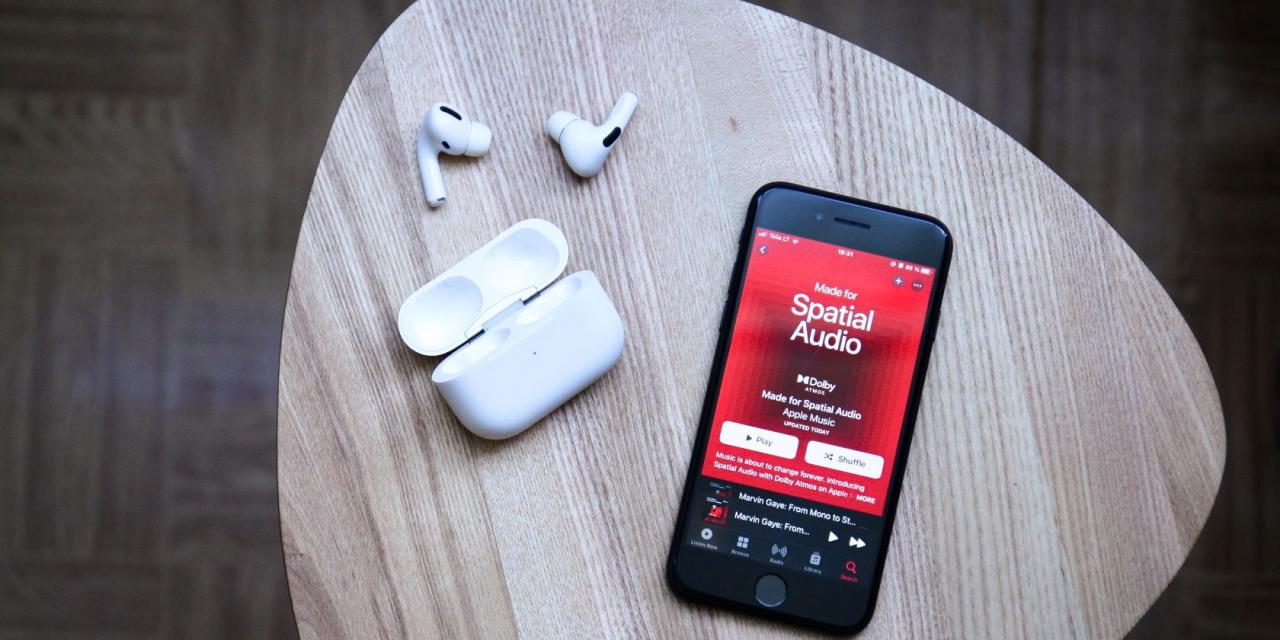
By default, Apple Music keeps lossless streaming disabled on mobile devices to prevent unexpected cellular data consumption and preserve local storage capacity. Enabling high-fidelity playback requires adjusting system preferences across your operating systems.
A. Configuring iOS and iPadOS Settings: Navigate to System Settings, select Music, and tap Audio Quality. Toggle Lossless Audio to Enabled. You can individually set stream resolutions for Cellular Streaming, Wi-Fi Streaming, and Downloads to balance bandwidth with audio fidelity.
B. Setting Up High-Resolution Audio on macOS: Open the Apple Music Application on your Mac, navigate to Preferences in the top menu, click the Playback tab, and check the Lossless Audio box. Select your preferred sample rate up to 24-bit/192kHz. To avoid automatic downsampling by macOS, configure the Audio MIDI Setup utility to match your external DAC’s maximum capability.
C. Enabling High-Fidelity Audio on Android Devices: Download the official Apple Music application from the Google Play Store. Open App Settings, select Audio Quality, and toggle Lossless Audio on. Android devices with external USB DAC support can output high-bitrate audio bypassing native Android sample rate conversion algorithms.
D. Managing Bandwidth and Download Storage Costs: High-resolution audio files consume substantially more data than standard AAC streams. A 3-minute track encoded in 256kbps AAC occupies approximately 6 MB. The same track in standard 24-bit/48kHz Lossless requires ~36 MB, while a 24-bit/192kHz Hi-Res Lossless file can exceed 145 MB. Plan offline download storage accordingly.
6. Competitive Landscape: Apple Music vs. Market Competitors
Apple Music’s decision to bundle lossless capabilities into standard subscription tiers disrupted the streaming music economy, triggering reactive moves from rival platforms. Analyzing how Apple Music compares against competitive offerings highlights key differences in catalog breadth, pricing structures, and underlying technological frameworks.
A. Apple Music versus Spotify Audio Strategy: While Spotify announced its intentions for a “Spotify HiFi” tier, delays and shifting corporate priorities left Spotify relying primarily on 320kbps Ogg Vorbis compression. Apple Music holds a massive advantage in fidelity, catalog size, and integrated spatial sound rendering without charging extra monthly fees.
B. Comparing Apple Music to Tidal and MQA Technology: Tidal built its brand reputation around high-fidelity streams, historically utilizing Master Quality Authenticated (MQA) compression. MQA required specialized hardware unfolding hardware. Apple Music’s open ALAC standard provides completely uncompressed, unadulterated PCM bitstreams accessible across universal equipment without proprietary licensing constraints.
C. Analyzing Amazon Music HD and Qobuz Alternatives: Amazon Music HD adjusted its pricing structure following Apple’s market announcement, bundling HD and Ultra HD playback into standard Amazon Music Unlimited memberships. Qobuz remains an audiophile staple offering high-res purchases alongside streaming, but Apple Music retains a broader global catalog and seamless device integration.
D. Comprehensive Value Proposition Comparison: When assessing platform feature sets, Apple Music delivers an extraordinary combination of over 100 million lossless tracks, integrated Dolby Atmos mixing, curated classical music catalogs, and deep ecosystem synergy across iOS, macOS, watchOS, and tvOS hardware ecosystems.
7. Industry Impact: Transformation in Production and Distribution
The widespread adoption of high-fidelity streaming exerts deep influence on modern audio production, sound engineering standards, and artist royalty ecosystems. Audio engineers and record producers no longer design master recordings solely for low-bitrate compressed playback or car radio equalization.
With Spatial Audio and Dolby Atmos gaining rapid market traction, mixing engineers are increasingly tasked with building multi-channel spatial masters alongside traditional stereo mixes. Record labels are actively remastering legacy catalog albums from original analog master tapes to 24-bit/192kHz digital formats, preserving cultural musical history in pristine digital archives. Furthermore, spatial audio streaming algorithms incentivize artists and producers to embrace three-dimensional soundscapes, creating unprecedented creative opportunities for acoustic expression.
8. Troubleshooting and Performance Optimization Tips
Achieving pristine sound reproduction involves eliminating dynamic bottlenecks across hardware and software signal paths. If you encounter audio dropouts or unsatisfactory audio quality, consider applying these optimization methodologies:
A. Audit Your Signal Chain Integrity: Ensure that every component from software source to physical headphone drivers supports high-resolution transmission. Avoid low-quality dongles, unshielded cables, or intermediate wireless converters that introduce unwanted jitter or compression.
B. Disable Equalizer and Processing Coloration: For pure, uncolored sound matching original studio master recordings, turn off software EQ presets within your device settings. This guarantees flat frequency response without artificial bass boosts or treble harshness.
C. Optimize Network Buffering and Cellular Bandwidth: High-resolution files demand stable network connections. If you experience buffering while streaming Hi-Res Lossless audio on mobile networks, consider switching cellular playback settings to standard Lossless (24-bit/48kHz) or pre-downloading albums over high-speed Wi-Fi connections.
9. Frequently Asked Questions (FAQ)
Q1: Can I listen to Apple Music Lossless on my AirPods or AirPods Pro?
Answer: While AirPods deliver outstanding audio performance and support Spatial Audio with Dolby Atmos, they stream wirelessly via Bluetooth using the lossy AAC codec. To experience true lossless audio bit-for-bit, you must use wired audio equipment connected to your device.
Q2: Does Apple Music charge extra for Lossless or Spatial Audio features?
Answer: No. Apple Music includes its entire catalog of Lossless Audio and Spatial Audio tracks in standard individual, family, and student subscription tiers at no additional monthly charge.
Q3: What is the primary difference between Lossless and Hi-Res Lossless?
Answer: Standard Lossless audio ranges up to 24-bit at 48kHz, providing pristine studio-quality sound playable directly through standard devices. Hi-Res Lossless extends up to 24-bit at 192kHz, delivering maximum acoustic detail but requiring an external Digital-to-Analog Converter (DAC) for playback.
Q4: How much storage space do Lossless audio files require?
Answer: Standard Lossless audio files occupy approximately 36 MB per 3-minute track, whereas Hi-Res Lossless files can consume upwards of 145 MB per track. Users downloading large music libraries should ensure sufficient local device storage capacity.
10. Final Verdict: The New Benchmark for Music Streaming
Apple Music’s high-fidelity tier represents a defining milestone in the digital audio landscape. By democratizing access to uncompressed studio master recordings and multi-dimensional Spatial Audio without charging subscription premiums, Apple set a new quality benchmark for the entire music industry. Whether you are a casual music lover exploring spatial acoustics through wireless headphones or an audiophile utilizing custom DACs and planar magnetic headphones, Apple Music delivers an unmatched combination of acoustic quality, catalog breadth, and technological value.