The digital music landscape is witnessing a seismic shift. For years, the industry narrative has been dominated by a few major players, with Spotify often seen as the undisputed king of music streaming. However, 2025 and 2026 have brought a surprising and exciting twist: the meteoric rise of Qobuz. Once a niche platform for audiophiles, Qobuz has emerged as the fastest-growing music streaming service, fundamentally altering the conversation around sound quality, artist compensation, and the future of the industry .
The Growth Surge
The numbers are staggering. According to data from SimilarWeb, Qobuz was the second-fastest-growing music and media app in the United States in 2025, and ranked third in the United Kingdom . This explosive growth is not just a fleeting trend; it reflects a deep-seated change in consumer preferences. The company has officially confirmed that it has surpassed 1.2 million monthly active users (MAUs), a massive spike from around 500,000 the previous year . This represents a year-over-year increase of over 100%, a figure that has caught the attention of the entire music industry. The United States has now become Qobuz’s biggest territory, accounting for about a third of its revenue . This growth has been so significant that Qobuz was recognized as a Digital 100 winner by Similarweb for its remarkable digital expansion .
Why is Qobuz Suddenly So Popular?
Several converging factors have propelled Qobuz from a well-kept secret to a mainstream alternative. The growth is not attributable to a single cause but rather a perfect storm of industry trends, consumer dissatisfaction, and Qobuz’s unique strengths.
A. The Great Spotify Exodus
A significant driver of Qobuz’s new user base is a wave of listeners and artists departing from Spotify . This exodus, which gained serious momentum in 2025, has been fueled by a combination of issues:
-
Price Hikes: Spotify has implemented multiple price increases, making many users reconsider the value proposition of their subscription .
-
Artist Payout Controversies: Perhaps the most significant factor is the ongoing criticism of Spotify’s low per-stream payouts. High-profile artist boycotts and widespread social media campaigns have brought the issue of fair compensation into the spotlight .
-
AI-Generated Music Backlash: Spotify has faced intense criticism, even being dubbed “Slopify” by some users, for its perceived lack of action against AI-generated “noise” music and its own promotion of AI-generated content . This has led to a public relations crisis and a desire for platforms that are more human-centric.
-
Political and Ethical Concerns: Some users were also motivated by political considerations, such as boycotts over Spotify’s former CEO’s investments in military technology .
Interestingly, Qobuz’s Managing Director of North America and Northern Europe, Dan Mackta, noted that a surprising number of Spotify users ditched their accounts immediately after the release of their year-end ‘Wrapped’ campaigns, suggesting a moment of reflection on their listening habits and platform loyalty .
B. Unmatched Sound Quality: A Core Principle
At its heart, Qobuz’s appeal lies in its unwavering commitment to high-fidelity audio. For 19 years, the service has built its reputation on delivering an authentic sound experience . While other platforms have introduced hi-res tiers, Qobuz has always been a music-exclusive service dedicated to the best possible sound quality.
-
Lossless and Hi-Res Audio: Qobuz offers streaming in CD-quality (FLAC 16-Bit/44.1 kHz) and Hi-Res audio (24-Bit encoded sound up to 192 kHz), allowing listeners to hear music exactly as it was mastered in the studio .
-
Expansive Catalog: The platform boasts a vast library of over 100 million tracks, ensuring that this high-quality listening experience is available for a wide range of music .
-
A Music-Only Focus: Unlike many of its competitors, Qobuz does not dilute its platform with podcasts or audiobooks. This focus on music creates a purer, more intentional listening experience .
C. Industry-Leading Artist Compensation
In an era where artists are increasingly vocal about fair pay, Qobuz has taken a revolutionary step: transparency. In a move that sent shockwaves through the industry, Qobuz commissioned an independent audit to validate and publish its per-stream payouts.
-
Transparent and Verified Payouts: The audit revealed that for the fiscal year ending March 31, 2024, Qobuz rights owners received nearly $0.0187 per stream . This makes Qobuz the first streaming platform to publicly disclose its royalty rate with independent validation .
-
More Than 4x the Market Average: This figure is approximately 4.4 times the market average and is roughly six times Spotify’s per-stream payout . It’s also more than double Apple Music’s estimated payout of around $0.008-$0.010 per stream . Tidal, another high-payer, offers an average of $0.012-$0.015 per stream , but Qobuz remains the highest of any major platform.
-
High Revenue Per User (ARPU): Qobuz’s annual average revenue per user (ARPU) of $135.90 is more than 6.5 times the market average of $20.74 . This premium subscriber base allows the platform to pay artists significantly more.
D. A Superior User Experience and App Redesign
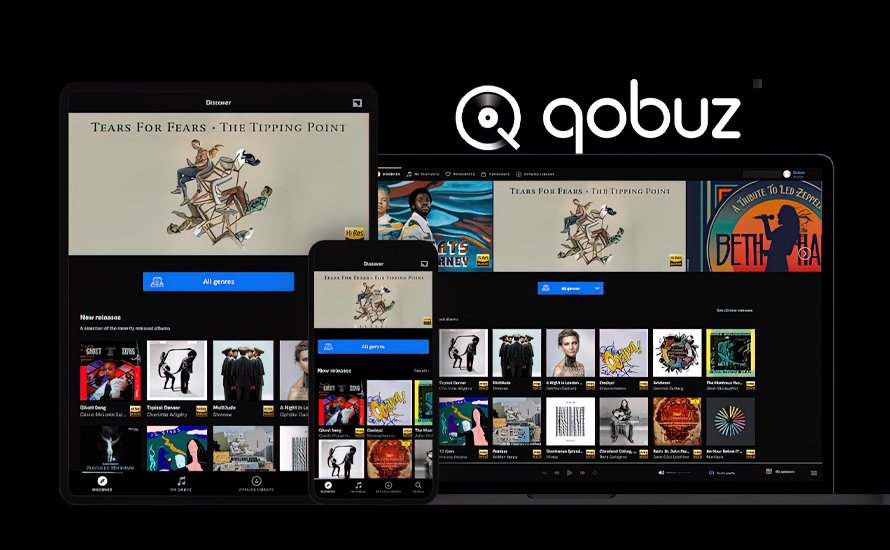
Qobuz has long been known for its sound quality, but its user interface was often considered a weak point. In a significant update in July 2026, Qobuz finally gave its app the comprehensive “glow-up” hi-res fans had been requesting .
-
Redesigned Mobile Player: The iOS and Android apps now feature a completely redesigned player with a more dynamic interface shaped by the colors and artwork of each album .
-
Synchronized Lyrics: One of the most requested features, real-time lyrics, has been added. This feature, which moves line-by-line with the song and even offers translations, closes a major gap with larger streaming rivals .
-
Always-Visible Miniplayer: A miniplayer remains on screen during browsing, allowing for seamless control of playback while discovering new music .
-
Enhanced Exploration: A new “Explore” section turns the currently playing track into a gateway, allowing listeners to jump to similar albums, artists, genres, and curated playlists, as well as Qobuz Magazine’s reviews and interviews .
-
Simplified Queue Management: Managing the listening queue has been streamlined, making it easier to follow upcoming tracks, reorder songs, and see what autoplay will play next .
-
CarPlay Update: Following a CarPlay refresh in February 2026 that added improved library controls and Siri support, the mobile update completes a significant effort to improve the user experience across all platforms .
E. Human Curation and Editorial Depth
In an age of algorithm-driven recommendations, Qobuz stands out for its commitment to human curation and editorial content . This makes the app feel less like a digital shelf and more like a guided record store .
-
Qobuz Magazine: The platform features over 500,000 original editorial articles, including news, in-depth “Panorama” features, artist interviews, and album reviews .
-
Human-Curated Playlists: Thousands of playlists are carefully crafted by music experts across a wide range of genres, including jazz, classical, rock, and electronic, offering a level of curation that algorithms often miss .
-
Rich Metadata and Credits: Listeners can access detailed credits, biographies, technical file details, and digital booklets with liner notes, creating a richer, more educational listening experience .
F. A Surge from Unexpected Audiences
While Qobuz was once the domain of classical and jazz audiophiles, the platform is now attracting a much broader audience .
-
K-Pop Fans: In a retro-tech phenomenon also seen on other platforms, dedicated fan communities like BTS fans have flocked to Qobuz for its high-quality downloads and the ability to directly support their favorite artists through purchases .
-
High-Profile Users: Celebrities such as Chelsea Handler and Christina Hendricks have become vocal Qobuz users, helping to bring the platform into the mainstream consciousness .
-
Ethically-Minded Consumers: Listeners who are concerned about artist welfare and the ethical implications of AI-generated music are increasingly choosing Qobuz as a more ethical alternative .
The Future of Qobuz
Qobuz’s rise in 2025 and 2026 has been nothing short of remarkable. The platform’s success is a testament to a powerful counter-trend in the music industry: a growing demand for quality, ethics, and a more authentic connection to music and the artists who create it. Its combination of industry-leading sound quality, transparent and high artist payouts, human curation, and a continually improving user experience presents a compelling alternative for a growing segment of music lovers.
While it still faces the challenge of expanding its user base further, with the U.S. now leading its revenue growth and a presence in over 26 countries, Qobuz is poised to solidify its position not just as a niche player, but as a major force in the future of music streaming . As the industry grapples with the tension between scale and sustainability, Qobuz has carved out a path that proves you can be both a fast-growing business and a champion for music and its creators.