The digital revolution has fundamentally transformed nearly every sector of the modern economy, but few industries have experienced such a seismic shift as the music business. Gone are the days when aspiring musicians had to rely solely on physical album sales, radio airplay, or the benevolence of major record labels to build a career. Today, the gateway to global stardom often lies in the cloud, accessible through a smartphone and an internet connection. Music streaming platforms have not only changed how people consume audio content but have also dramatically expanded the potential reach of artists, from bedroom producers in Jakarta to indie bands in Brooklyn.
This article delves deep into the multifaceted ecosystem of music streaming, examining how these digital services function as powerful catalysts for artist growth. We will explore the mechanisms behind playlist algorithms, the role of data analytics, the economics of streaming revenue, and the strategic approaches that modern musicians must adopt to thrive. By the end of this comprehensive analysis, you will understand why streaming is not merely a distribution channel but a dynamic launchpad for artistic careers in the 21st century.
The Paradigm Shift: From Physical to Digital
To appreciate the current landscape, one must first understand where the industry has come from. For decades, the music industry operated on a scarcity model. Physical products vinyl records, cassette tapes, and compact discs were finite goods that required manufacturing, shipping, and retail shelf space. Radio stations acted as gatekeepers, and record labels held the keys to production budgets and promotional campaigns. An artist’s success was often determined by geographic proximity to major markets and the financial backing of established institutions.
The advent of peer-to-peer file sharing in the late 1990s and early 2000s disrupted this model, but it also sowed the seeds for a new order. Legal streaming services emerged as the industry’s savior, offering a solution that balanced consumer convenience with artist compensation. Platforms like Spotify, Apple Music, Amazon Music, and YouTube Music have since amassed hundreds of millions of active users worldwide. This global user base represents a captive audience that is more diverse and accessible than any previous generation of music fans.
Unlike physical distribution, which was constrained by borders and logistics, streaming platforms transcend national boundaries. An artist in Nigeria can capture the attention of a listener in Norway within seconds of releasing a track. This borderless nature is the first and most significant way streaming expands artist reach. The world has effectively become a single marketplace, and the only currency that matters is attention.
Algorithmic Curation and Discovery
One of the most powerful tools at the disposal of streaming platforms is the recommendation algorithm. These sophisticated systems analyze listening habits, user behavior, track metadata, and even the audio characteristics of songs to curate personalized playlists. For artists, this represents an unprecedented opportunity to be discovered by listeners who might never have encountered their music through traditional means.
How Algorithms Work
At its core, a music streaming algorithm is designed to keep users engaged. It learns what a listener enjoys and then serves up content that aligns with those preferences. This can happen in several ways:
A. Collaborative Filtering: This method looks at the behavior of similar users. If User A and User B both listen to the same three indie rock bands, the algorithm might recommend a fourth band that User A likes but User B hasn’t yet heard. This creates a web of musical connections that can lead listeners down rabbit holes of discovery.
B. Content-Based Filtering: Here, the algorithm examines the actual audio properties of a song—tempo, key, instrumentation, and vocal style. If a user frequently listens to upbeat, synth-heavy tracks, the platform will recommend other songs that share those sonic characteristics, regardless of the artist’s popularity.
C. Natural Language Processing (NLP): Some platforms analyze text descriptions, reviews, and even social media chatter to understand the mood or theme of a song. This helps in categorizing tracks into niche genres or situational playlists like “Rainy Day Lo-Fi” or “Morning Commute Jazz.”
For an emerging artist, getting placed on a popular algorithmic playlist like “Discover Weekly” or “Release Radar” can be life-changing. These playlists are automatically generated for each user, meaning that a slot on them is personalized and highly effective. Unlike editorially curated playlists, algorithmic playlists are democratic; they do not require a human gatekeeper to approve a track. Instead, they reward songs that generate high engagement metrics, such as high save rates, low skip rates, and repeat listens.
The Power of Editorially Curated Playlists
While algorithms handle the heavy lifting of personalized discovery, human curation remains a vital component of the streaming ecosystem. Major platforms employ teams of music experts who craft playlists for specific moods, activities, and genres. These editorial playlists often have enormous followings, with some boasting millions of subscribers.
For an independent artist, landing a spot on a prestigious playlist like “New Music Friday” or “RapCaviar” is akin to winning the lottery. It provides an instant injection of exposure that can catapult a track from obscurity to viral fame. However, securing such a placement requires more than luck; it demands a strategic approach to pitching and release planning.
Artists and their teams can submit unreleased music to platform curators through tools like Spotify for Artists. This submission process is competitive, but it levels the playing field. A well-crafted pitch that highlights the story behind the song, its emotional resonance, and its potential appeal to a specific audience can capture a curator’s attention. The key is to be concise, authentic, and data-backed. Demonstrating that you have an existing fan base, even a small one, that engages with your content increases your credibility.
Data Analytics: The Artist’s Compass
Perhaps one of the most revolutionary aspects of music streaming is the access to granular data. In the past, artists had little to no insight into who was listening to their music or where they were located. They relied on concert ticket sales and merchandise feedback to gauge their popularity, which was often an imprecise science.
Today, streaming platforms provide comprehensive dashboards that reveal a wealth of information. Artists can see:
-
Demographics: Age, gender, and geographic location of listeners.
-
Listening Behavior: Which songs are played most frequently, how often they are skipped, and whether users save them to personal libraries.
-
Playlist Performance: Which user or editorial playlists are driving the most streams.
-
Audience Overlap: Which other artists their fans are listening to, which can inform tour planning and collaboration opportunities.
This data empowers artists to make informed decisions. For example, if an artist discovers that they have a surprisingly large following in São Paulo, they might consider scheduling a tour stop in Brazil or releasing a Portuguese-language version of a hit single. Similarly, if data reveals that listeners tend to skip a particular track after 30 seconds, the artist may reconsider the song’s intro or structure for future releases.
Data analytics also enhance marketing efficiency. Instead of casting a wide net with generic advertisements, artists can use their listener insights to target specific geographic regions or demographic segments with precision. This not only saves money but also maximizes return on investment, ensuring that promotional efforts reach the people most likely to become loyal fans.
The Economics of Streaming: Revenue Streams and Royalties
A critical aspect of artist reach is the ability to generate income. While streaming has democratized distribution, it has also introduced a complex and often controversial royalty system. Understanding how money flows through the streaming ecosystem is essential for any artist hoping to build a sustainable career.
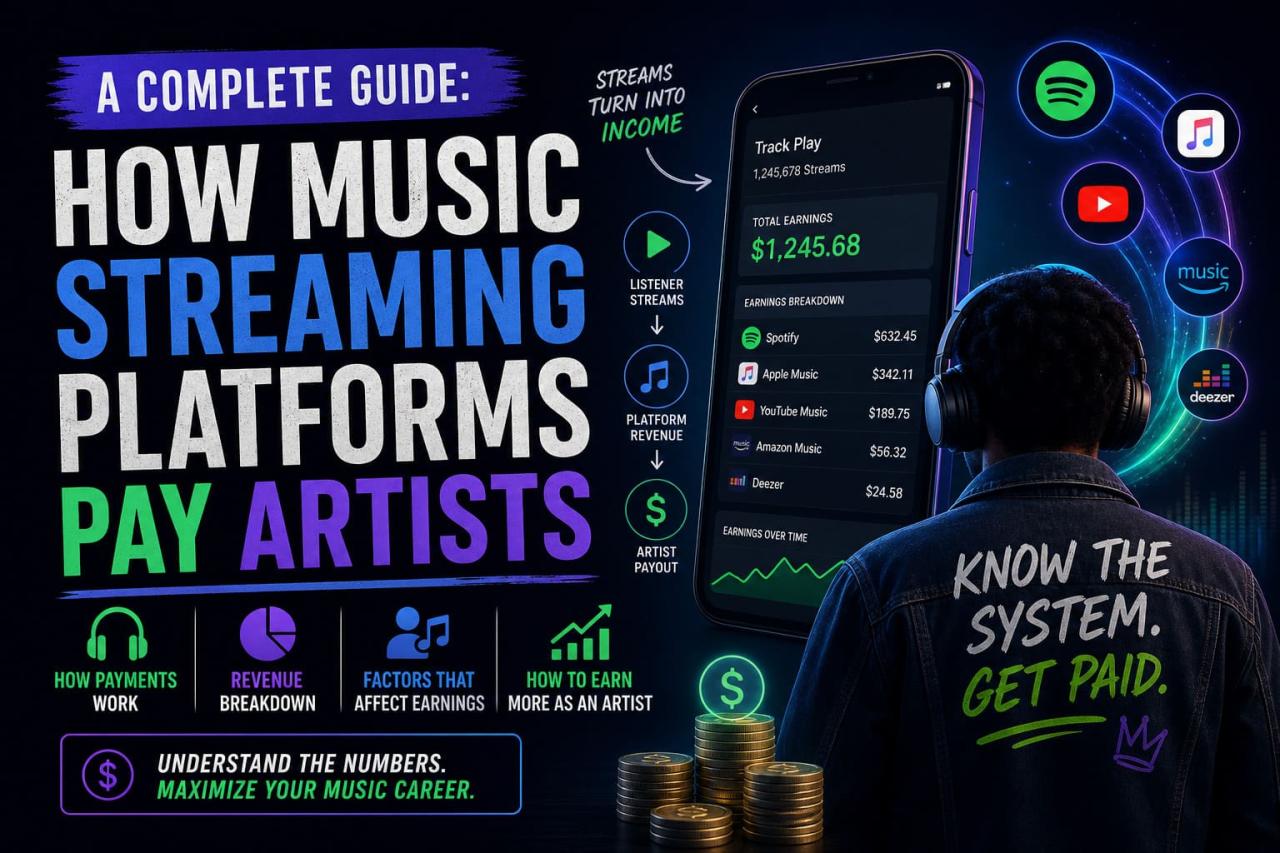
Streaming platforms operate on a pro-rata or user-centric payment model. In the pro-rata model, all subscription and ad revenue is pooled together. Then, the total number of streams across the platform is calculated, and each artist is paid a share proportional to their total stream count. This means that an artist’s earnings are heavily influenced by the overall activity of the platform, not just their individual fan base.
While the per-stream rate is often criticized for being too low sometimes fractions of a cent the sheer volume of streams can add up. An artist with a dedicated following of 10,000 fans who each stream an album 50 times a year can generate a meaningful income. Moreover, streaming revenue is not limited to the audio itself. Many platforms are integrating video content, live performances, and merchandise stores directly into their interfaces, creating additional revenue streams.
A. Performance Royalties: These are generated every time a song is streamed. Both the songwriter and the recording artist receive a share, though the exact split depends on their contracts with publishers and labels.
B. Mechanical Royalties: These are paid to songwriters and publishers for the reproduction of their compositions. In the streaming context, this applies to the digital copies generated whenever a song is played.
C. Sync Licensing: As an artist’s reach expands, they may attract interest from film, television, and advertising producers. Streaming platforms have made it easier for sync agents to discover new music, leading to lucrative licensing deals that far exceed streaming royalties.
D. Fan Funding and Direct Support: Some platforms allow fans to tip artists directly or purchase digital merchandise. This fan-to-artist connection bypasses traditional intermediaries and fosters a more intimate relationship.
It is important to note that while streaming may not replace the income from a sold-out stadium tour, it provides a steady baseline that can fund studio time, travel, and marketing. For independent artists, this baseline is crucial for career longevity.
Social Integration and Viral Marketing
In today’s interconnected world, music streaming does not exist in a vacuum. Platforms are deeply integrated with social media networks, allowing users to share what they are listening to with a single click. This integration has given rise to viral phenomena that can propel unknown artists to fame overnight.
The most notable example of this is TikTok. While TikTok is a short-form video platform, its impact on music streaming is undeniable. A song that gains traction on TikTok through user-generated content be it a dance challenge, a meme, or a heartfelt montage often sees a corresponding spike in streams on audio platforms. This cross-pollination amplifies reach exponentially.
Streaming platforms have recognized this synergy and have begun incorporating features that facilitate social sharing. Playlists can be made collaborative, allowing friends to contribute tracks. Users can follow each other’s listening activity, creating a sense of community. For artists, encouraging fan-generated content is a powerful organic marketing strategy.
A. Hashtag Campaigns: Artists can create unique hashtags for their releases, encouraging fans to post their own videos using the song. This generates a ripple effect of visibility.
B. Pre-Save Campaigns: Similar to the pre-order concept, pre-save campaigns allow fans to save a song to their library before its official release. This signals to the platform’s algorithm that there is anticipation, which can boost the song’s prominence upon release.
C. Live Streaming Events: Many platforms have integrated live audio and video streams. Artists can host virtual listening parties, Q&A sessions, or even exclusive concerts for their streaming followers. These events not only generate revenue through virtual tickets but also deepen emotional connection.
Breaking Down Barriers for Independent Artists
Historically, the music industry was notoriously difficult to penetrate without institutional backing. The cost of recording, manufacturing, and distribution was prohibitive. Today, the barriers have been significantly lowered. High-quality recording equipment is affordable, distribution platforms like TuneCore and DistroKid make it simple to upload music globally, and streaming services provide the promotional engine.
This democratization has led to an explosion of creativity. Niche genres that would have struggled to find a physical audience now thrive in the digital space. Hyper-specific subgenres like “Korean R&B,” “Italian Synthwave,” or “Afrobeat Fusion” can attract a dedicated global following. Streaming platforms curate these niche playlists, ensuring that even the most obscure music finds its audience.
Furthermore, the independent route allows artists to retain full creative control. Without the pressure of a label demanding radio-friendly singles, artists can experiment with longer tracks, unconventional structures, and deeply personal lyrics. This authenticity often resonates more strongly with modern listeners, who value genuine connection over polished artifice.
Challenges and Considerations
While the opportunities are vast, navigating the streaming landscape is not without its challenges. The sheer volume of music released daily over 100,000 tracks every day on Spotify alone means that visibility is fiercely competitive. Standing out requires a combination of artistic excellence, strategic planning, and consistent effort.
A. Saturation: With so many artists vying for attention, there is a constant pressure to release new content frequently. This can lead to burnout and a dilution of artistic quality if not managed carefully.
B. Royalty Fairness: The debate over streaming royalties continues to rage. Many artists argue that the current pro-rata system unfairly benefits established superstars while leaving emerging musicians with negligible earnings. Some platforms are experimenting with user-centric payment models, where a user’s subscription fee is distributed only to the artists they actually listen to, which could level the playing field.
C. Algorithm Dependency: While algorithms aid discovery, they can also pigeonhole artists into specific genres. An artist known for a specific sound may find it difficult to venture into new territory without confusing the algorithm and losing their recommended placements.
D. Attention Economy: Listeners are inundated with notifications, advertisements, and recommendations. Capturing and retaining their attention requires more than just good music; it demands compelling visuals, storytelling, and consistent engagement across multiple channels.
The Future of Artist Expansion
Looking ahead, the trajectory of music streaming is poised for further innovation. Artificial intelligence is expected to play a larger role in music creation and curation. We may see hyper-personalized radio stations that not only recommend existing songs but also generate AI-composed tracks tailored to a user’s mood in real-time.
Virtual reality and augmented reality are also on the horizon, promising immersive concert experiences that transcend physical venues. Artists could perform virtual shows for millions of fans simultaneously, breaking down the limitations of stadium capacity.
Blockchain technology and non-fungible tokens (NFTs) offer another frontier for artist monetization. By tokenizing music, artists can sell limited-edition digital copies, create unique fan experiences, and establish direct economic relationships with their supporters without intermediaries.
Nevertheless, the core mission of streaming platforms will remain constant: connecting creators with consumers. The tools will evolve, but the fundamental principle of expanding artist reach through digital infrastructure will persist.
Practical Steps for Maximizing Streaming Success
For artists ready to harness the power of streaming, a systematic approach is essential. Below is a detailed guide to maximizing your reach and building a loyal fan base.
A. Optimize Your Profile:
Your artist profile is your digital storefront. Ensure that it is complete with a compelling bio, high-quality images, and links to your social media. Use the canvas feature to add looping visuals to your tracks, which can increase engagement.
B. Create a Release Strategy:
Do not upload music aimlessly. Plan your releases around specific dates, ideally on Fridays when global playlists are typically updated. Build anticipation with teasers and countdowns.
C. Pitch Early and Effectively:
Submit your unreleased tracks to editorial playlists at least four weeks in advance. Craft a pitch that tells a story, explains the song’s vibe, and mentions any notable collaborations or achievements.
D. Engage with Playlist Curators:
Beyond official platform curators, there are thousands of independent curators who run influential playlists. Research these curators, listen to their playlists, and reach out with personalized messages. Respect their submission guidelines to avoid being ignored.
E. Leverage Social Media:
Cross-promote your streaming content on Instagram, TikTok, Twitter, and YouTube. Post behind-the-scenes content, lyric snippets, and live performances to keep your audience engaged. Use paid advertising on these platforms to target lookalike audiences who may enjoy your music.
F. Encourage User Interaction:
Ask your fans to add your songs to their personal playlists, as this signals to the algorithm that your track is valuable. Incentivize saves and shares with exclusive content or giveaways.
G. Analyze and Adapt:
Regularly review your streaming analytics. Identify which songs are performing best and which playlists are driving the most streams. Use this data to refine your marketing strategy and inform your future creative projects.
H. Collaborate Strategically:
Collaborations are one of the fastest ways to expand your reach. Partner with artists who have a similar but slightly different audience. This cross-pollination introduces your music to a fresh demographic.
I. Maintain Consistency:
Consistency is key in the attention economy. Release content regularly—be it singles, EPs, or acoustic versions—to keep your name in front of listeners. Consistency also applies to your brand identity; ensure your visual aesthetic and messaging are cohesive across all platforms.
J. Foster Community:
Finally, remember that your fans are your greatest asset. Engage with them genuinely. Reply to comments, host Q&A sessions, and show appreciation for their support. A loyal fan base will not only stream your music repeatedly but will also advocate for you within their own networks.
Conclusion
Music streaming platforms have irrevocably altered the landscape of the music industry, transforming it from a closed ecosystem controlled by a few powerful players into an open marketplace where talent, creativity, and persistence can truly shine. The expansion of artist reach is no longer a theoretical possibility but a tangible reality, evidenced by countless success stories of independent musicians who have built thriving careers from their bedrooms.
While challenges such as royalty disputes and saturation persist, the tools available to modern artists are more powerful than ever. Data analytics, algorithmic recommendation, social media integration, and global distribution networks have democratized access to audiences. The onus is now on artists to learn these tools, adopt strategic approaches, and produce music that resonates on a human level.
As we move further into the digital age, the relationship between artists and streaming platforms will continue to evolve. Those who embrace adaptability, harness the power of data, and remain authentic to their artistic vision will be best positioned to capture the global audience that now lies at their fingertips. The melody may have changed, but the potential for reach has never been greater.