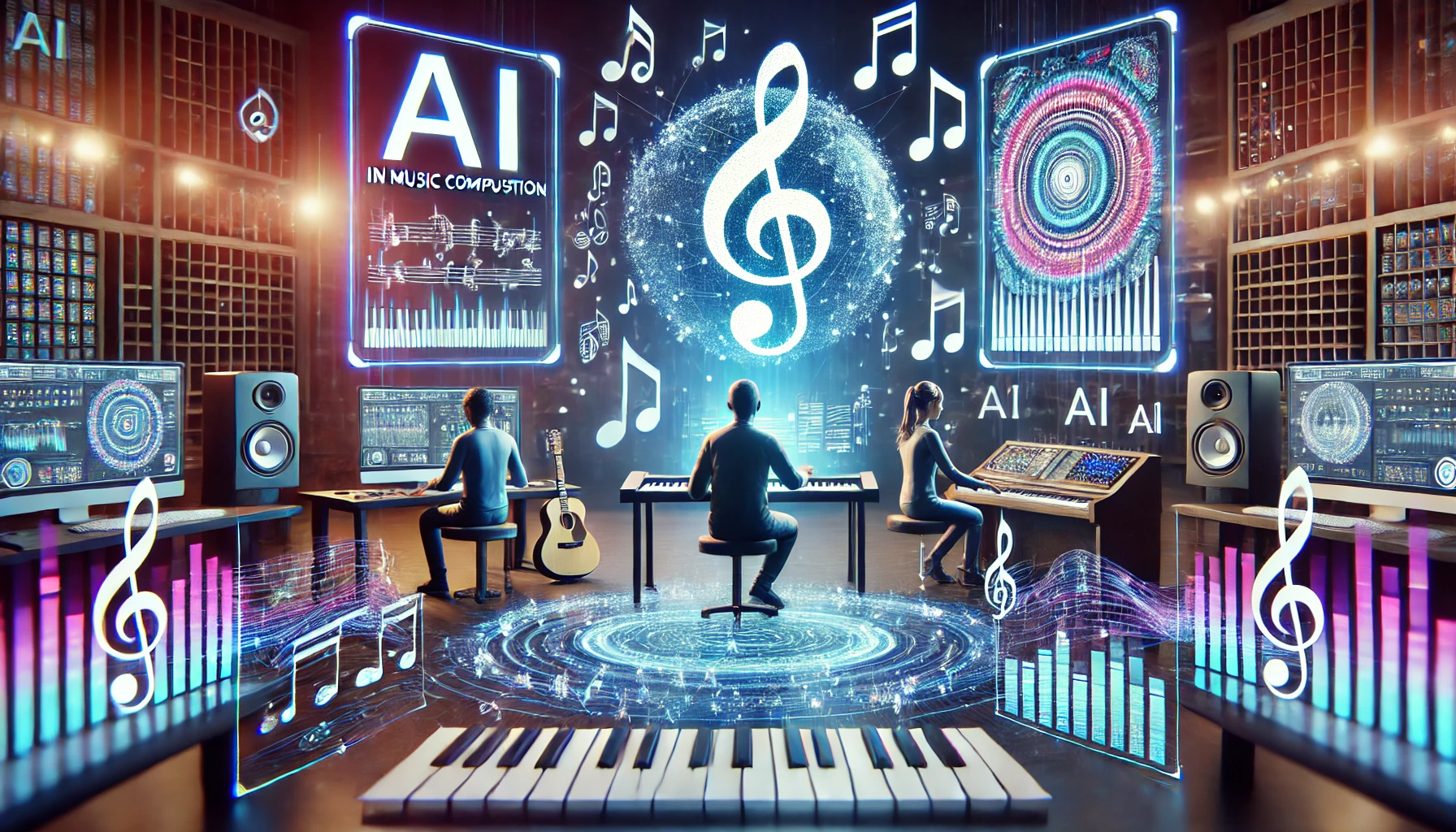
The music industry stands at a transformative crossroads in 2026, where artificial intelligence has evolved from a futuristic concept into a tangible creative force reshaping how music is composed, produced, distributed, and consumed. What began as experimental algorithms generating simple melodies has matured into sophisticated systems capable of producing full-length compositions, cloning voices, and enabling anyone with a smartphone to become a music creator. This seismic shift has sparked debates about creativity, copyright, and the very definition of musicianship, while simultaneously opening unprecedented opportunities for artistic expression. As AI-generated music trends surge across platforms and industries, understanding this landscape has become essential for artists, investors, and music enthusiasts alike. The emergence of powerful AI tools, combined with widespread accessibility and creative applications, signals not merely a passing fad but a fundamental restructuring of the musical ecosystem that will define the future of sound.
The Explosive Rise of AI Music Creation
The generative AI in music market has experienced remarkable growth, expanding from $0.44 billion in 2025 to an estimated $0.57 billion in 2026, representing a compound annual growth rate of 28.5% . This exponential trajectory reflects the rapid adoption of AI tools across both professional and amateur music production. Industry projections indicate the market could reach $1.34 billion by 2030, driven by integration with virtual and augmented reality experiences, transformer-based models for melody and harmony generation, and increasing collaboration between humans and AI in creative processes .
Smartphone accessibility has been a primary catalyst for this growth. With over 4.88 billion smartphone users globally, representing approximately 60% of the world’s population, music creation apps powered by generative AI have become widely available . These applications allow users to compose, remix, and produce music directly from their mobile devices, eliminating traditional barriers such as expensive studio equipment or specialized software. The democratization of music production has fundamentally altered who can participate in music creation, shifting from a domain restricted to trained professionals to an inclusive space where anyone with creative ambition can contribute.
Major technology companies have invested heavily in AI music development. Apple, Alphabet, Microsoft, Sony, NVIDIA, and OpenAI all operate in this space, alongside specialized firms like Stability AI, SoundHound AI, Moises Systems, Boomy Corporation, and Suno.ai . This concentration of resources indicates industry confidence in AI’s transformative potential for music creation and consumption. The competitive landscape continues to evolve as established players and startups race to develop more sophisticated, user-friendly tools that push creative boundaries.
Leading AI Music Platforms and Innovations
Suno and the Text-to-Song Phenomenon
Suno has emerged as a dominant force in AI music generation, particularly following the viral “text-to-song” trend that swept TikTok in early 2026. The platform enables users to transform text messages, poems, or any written content into fully produced songs across various genres . The trend exploded when creators began turning humorous text exchanges with friends and family into AI-generated musical compositions, some achieving tens of millions of views.
One particularly notable viral hit originated from a user who transformed texts between friends during a tense social situation, with the all-caps “HELP HELP HELP HELP…” becoming an operatic gospel chorus that generated 23 million views and became the soundtrack to more than 28,000 other videos . This phenomenon demonstrates how AI music tools can amplify personal narratives and create culturally resonant content that traditional music production methods cannot replicate as quickly or accessibly.
The commercial impact has been substantial. Following the text-to-song trend, downloads of Suno’s app quadrupled week-over-week in the U.S., making it temporarily the most downloaded music app on both U.S. and U.K. Apple App Stores . The company rapidly developed features to partially automate the process, enabling users to convert screenshots of text into songs with minimal friction. This responsiveness to user behavior patterns illustrates how consumer demand shapes AI tool development.
TikTok creator Justice Washam exemplifies the personal and financial benefits of the trend. After posting a video featuring AI-generated songs from her daughter’s text messages requesting Starbucks and Snapchat, she gained nearly 200,000 new followers and earned approximately $4,000 in advertising revenue over five weeks . Her experience highlights how AI music can serve as both creative expression and income generation for everyday users, not just established artists.
Stability AI’s Stable Audio 3.0
Stability AI has advanced the technical capabilities of AI music generation with its Stable Audio 3.0 suite, offering variable length generations capable of producing up to six minutes and twenty seconds of song composition . The family of models includes different tiers designed for various use cases:
A. Small SFX: Creates sound effects on any device, including mobile phones and consumer-grade laptops, enabling accessible audio production for content creators.
B. Small: Produces solid musical compositions on all devices, though limited to generating under two minutes of song, suitable for quick demos or social media content.
C. Medium: Boasts higher musicality with improved structure, melodic coherence, and phrasing, generating tracks up to six minutes and twenty seconds—sufficient for full song compositions.
D. Large: Represents the most advanced model, designed for music platforms and creative applications requiring low-latency generation at high volume, suitable for professional use .
Most of these models are “open weight,” meaning they are publicly available for download and further development, fostering innovation and customization within the developer community. The training data combines licensed audio from production library AudioSparx (806,284 audios) and Creative Commons recordings from Freesound, with filtering tools applied to prevent unauthorized copyrighted material from entering the dataset .
Stability AI has established strategic partnerships with Universal Music Group and Warner Music Group to develop “next generation professional music creation tools,” signaling major labels’ recognition of AI’s potential for enhancing rather than replacing traditional music production .
SketchSong: Hierarchical Song Generation
Academic research continues pushing technical boundaries, with SketchSong representing a significant advancement in hierarchical song generation. This framework addresses two fundamental challenges in AI music generation: song-level arrangement planning and fine-grained multi-track modeling .
SketchSong operates through a coarse-to-fine process:
A. Temporal Dimension: The system first predicts a compact sequence of high-level sketch tokens derived from compressed audio representations, then generates audio tokens conditioned on these sketches, providing explicit arrangement planning before detailed audio generation.
B. Track Dimension: The model explicitly models four tracks—vocals, bass, drums, and other instruments—enabling precise capture of distinct musical roles and interactions .
This approach has demonstrated superior performance on both objective metrics and human listening tests compared to baseline systems, achieving competitive results against post-trained open-source systems without employing additional preference optimization for lyrics and text-prompt alignments .
The Consumer Creator Revolution
One of the most significant developments in 2026 is the emergence of “consumer creators”—individuals who use AI music tools as a form of personal expression rather than professional ambition . This new category of music creator differs fundamentally from traditional musicians, producers, and industry professionals. Consumer creators engage with AI music generation as a hobby, social activity, or creative outlet, often sharing their work within digital communities rather than pursuing commercial release.
Analyst Olivia Jones of MiDia Research notes that consumer creators “may not ever intend to be professional music creators” but are instead “playing around with these tools more as a way of expressing their creativity, as a hobby” . This behavior mirrors the early days of photography when smartphones transformed picture-taking from a specialized skill to a universal activity. Just as shortform video content and livestreaming emerged from accessible camera technology, AI music tools are creating entirely new forms of musical expression and community engagement.
The implications for the broader music industry are significant. Jones notes that consumer creators “are often more likely to engage more with fan-created versions of an entertainment than the entertainment itself” . This suggests that people making AI songs about their favorite TV shows, for example, may spend more time listening to and remixing other fans’ creations than watching the original content. This shift in consumption patterns could fundamentally alter how audiences interact with media and entertainment.
The economic impact of consumer creators is already visible. Platforms like TikTok enable monetization of longer content, with AI-generated songs often exceeding the one-minute threshold required for ad revenue sharing . This creates financial incentives for creators to continue producing AI music, establishing a virtuous cycle where creative expression and income generation reinforce each other.
World Cup AI Fan Anthems: A Case Study
The 2026 World Cup provided a compelling demonstration of AI music’s cultural reach and creative potential. Fan-generated AI anthems supporting various national teams went viral across YouTube, TikTok, and Instagram, with millions of views and widespread engagement . These tracks often followed a formulaic pattern listing player names, calling for respect for the team’s “king” (such as Cristiano Ronaldo or Lionel Messi), and incorporating trending musical styles like Brazilian phonk.
French artist Crystalo, listed on Spotify as France’s “premier AI musical creator,” released “Imbattables” in February 2026, sparking the trend . Brazilian producer Guilherme Maia (artist name M4IA) followed with a similar format featuring a phonk melody created through AI-assisted production. However, Maia emphasizes that he “built the track on his own and used AI as an assistant when creating certain elements, rather than asking a music generation tool like Suno to create a song with one prompt” .
The proliferation of these songs raised important questions about authorship, copyright, and artistic originality. Maia himself acknowledged that “in music, there are clear rules. You can’t just copy someone else’s work or use samples without permission, even if AI is involved” . Yet many songs in the trend explicitly recycled the same phonk beat and formulaic structure, blurring the line between artistic emulation and unauthorized copying.
Professor Jason Palamara of Indiana University highlighted concerns about how artists are credited when their copyrighted work is used to train AI models: “It had to come from somewhere” . The inconsistencies appearing in some AI-generated tracks such as Portugal’s anthem sung with a Brazilian accent or mispronouncing James Rodriguez’s name in the Colombian version reveal the technology’s limitations regarding cultural nuance and linguistic accuracy.
Morgan Hayduk, co-CEO of music rights software company Beatdapp, observed that some listeners simply don’t care about these issues: “There seems to be a cohort of people who actually don’t care. They like the music, and they like the back story that it came from a large language model and not a songwriter or a group” . This suggests a generational or cultural shift in how audiences value music, potentially prioritizing novelty and accessibility over traditional notions of artistic authenticity.
Legal Battles and Copyright Challenges
The Fair Use Debate
AI music generation has triggered an unprecedented wave of copyright litigation, centering on whether training AI models on existing music constitutes fair use or infringement . The legal landscape remains highly unsettled, with conflicting court decisions and ongoing cases that could fundamentally reshape how AI companies develop their models.
Suno has faced multiple lawsuits, including a June 2025 class action filed by independent artists alleging unlawful scraping of copyrighted works . In October 2025, a group of artists similarly sued both Suno and Uncharted Labs (creator of Udio) over unlicensed use of sound recordings and musical works for training AI models, also seeking protection under the Illinois Biometric Information Privacy Act .
Record labels are now deploying neural “fingerprinting” technology to detect AI-derived infringement . Spotify announced in September 2025 that it had removed approximately 75 million AI-generated “spammy tracks” over a 12-month period, establishing a spam filter to prevent bad actors from generating royalties that would otherwise be distributed to professional artists and songwriters . These actions demonstrate platforms’ growing concern about AI’s potential to dilute revenue streams.
Major Label Settlements and Licensing
In October 2025, Universal Music Group settled its AI copyright infringement lawsuit against Udio, entering into license agreements for its recorded music and publishing catalogues . This settlement suggests major labels may prefer licensing arrangements over continued litigation, recognizing that AI companies require access to copyrighted materials and that compensation could become a significant revenue stream.
However, Suno continues fighting both UMG and Sony in court, despite reaching a licensing deal with Warner Music Group in 2025 . The company, valued at $5.4 billion in its latest fundraise, has consistently maintained that training AI models on music from the internet should be protected under fair use principles . Whether this defense will succeed remains one of the most consequential legal questions facing the music and technology industries.
Jamendo Lawsuits Against NVIDIA and Suno
Production music licensing library Jamendo has emerged as an aggressive litigant against AI companies, filing lawsuits against both NVIDIA (June 2026) and Suno (late June 2026) over alleged unauthorized use of its 55,600-track dataset for training AI music models . The Belgian-based company had made this dataset publicly available on GitHub as part of a research collaboration with Barcelona’s Universitat Pompeu Fabra, but explicitly restricted its use to “non-commercial research and academic purposes” .
Jamendo’s lawsuit against Suno alleges the company “obtained substantial value, including immediate access to a large, organized and commercially useful music catalogue” and “avoided the time, cost and effort required to independently source, clean, organize and validate comparable data” . The company had sent Suno an invoice for €16 million ($18 million) in September 2025, broken down as €289 ($330) for each track in the dataset, but Suno allegedly did not respond or pay .
The NVIDIA lawsuit centers on similar allegations, with Jamendo claiming the trillion-dollar chip giant “blatantly disregarded” its rights by exploiting the database for training its Fugatto and Audio Flamingo music models . NVIDIA had claimed its training used open-source datasets under Creative Commons license, but Jamendo asserts this misrepresents the dataset’s terms of use .
Alexandre Saboundjian, CEO of Jamendo’s owner Winamp Group, stated that “innovation and respect for intellectual property must go hand in hand to ensure a sustainable ecosystem for creators, rights holders and the companies developing tomorrow’s technologies” . These lawsuits could establish important precedents regarding dataset licensing and the commercial use of academic datasets.
Global Legal Developments
The copyright debate extends beyond the United States. In Germany, national music rights society GEMA sued OpenAI in the Munich Regional Court for unauthorized use of lyrics and musical works to train its models. In November 2025, the court sided with GEMA, finding that the unlicensed use of protected musical works violated German copyright law . This decision represents the first major European judicial ruling addressing generative AI developers’ liability for using copyrighted music without licenses.
In the United States, conflicting federal court decisions have complicated the legal landscape. In Bartz v. Anthropic PBC, Judge William Alsup held that model training using lawfully obtained books was “exceedingly transformative” and therefore fair use, likening it to human reading and learning processes . However, in Kadrey v. Meta Platforms, Inc., while Judge Vince Chhabria granted summary judgment for Meta, finding that large language model training constitutes fair use, he also noted plaintiffs had failed to demonstrate market harm .
The U.S. Copyright Office added further complexity through Part 3 of its Report on Copyright and Artificial Intelligence, issued May 2025. The office emphasized that high-volume copying for AI training “goes beyond established fair use boundaries” but declined to draw categorical lines, instructing courts to engage in case-by-case analysis . This ambiguity will likely drive continued litigation and lobbying efforts from both technology companies and creative industries.
Indian music publishers, including Saregama and T-Series, have also brought litigation against OpenAI, alleging infringement of their catalogs in model training . These parallel developments underscore the global nature of AI copyright disputes and the potential for conflicting international precedents.
Voice Cloning, Deepfakes, and Artist Rights

The ELVIS Act and Right of Publicity
Voice cloning technology has advanced dramatically, enabling digital reproductions that can simulate a singer’s style, accent, and emotional timbre with remarkable precision . These tools analyze tone, rhythm, breath, and inflection, creating performances indistinguishable from human artists. While legitimate applications exist—dubbing, accessibility, content localization—unauthorized impersonations have triggered urgent calls for regulation.
In 2024, Tennessee enacted the groundbreaking Ensuring Likeness Voice and Image Security (ELVIS) Act, explicitly prohibiting the commercial use of an individual’s cloned voice or likeness without authorization . The law provides for both criminal penalties and civil remedies, extending liability to technology providers that distribute AI tools primarily designed for unauthorized replication. This represents a significant expansion of traditional right-of-publicity protections, codifying a digital-age “voice right” for performers.
The ELVIS Act emerged partly in response to high-profile voice cloning controversies. A dispute over Michael Jackson’s posthumous album “Michael” (2010) established important precedents. In Serova v. Sony Music Entertainment, a fan alleged that tracks were performed by an impersonator rather than Jackson himself. The California Supreme Court held that Sony’s marketing statements about authenticity could be actionable under state consumer protection laws, leading Sony and the Jackson estate to remove contested songs and settle the case . This demonstrated the risks of mislabeling posthumous works and the importance of transparency regarding AI involvement.
Industry Responses and Artist Protection
Organizations including the Recording Academy and SAG-AFTRA have urged inclusion of AI-specific contractual clauses in collective bargaining agreements to safeguard performers’ control over synthetic versions of their voices . These efforts reflect growing recognition that voice cloning constitutes both an economic threat and an identity protection concern.
Artists are increasingly advised to:
A. Register copyrights before posting work online, providing legal protection against unauthorized use in AI training datasets.
B. Audit contracts for AI clauses defining terms around AI training, derivative works, and voice cloning, requiring client consent before catalogs or likenesses can be used for machine learning .
C. Document measurable economic harm resulting from AI use, such as streaming declines or loss of licensing opportunities, to support potential legal claims .
D. Request “unlearning” as an equitable remedy in settlement negotiations, requiring AI companies to remove copyrighted works from training datasets, though courts have yet to order such remedies .
The $1.5 billion preliminary settlement between Anthropic and a certified class of authors demonstrates that litigation has teeth and can result in substantial compensation . However, whether courts will order the deletion or removal of copyrighted works from existing training datasets remains an open question.
International Regulatory Developments
Regulatory discussions continue abroad. In December 2024, the UK’s Department for Culture, Media, and Sport launched a consultation on AI and performer rights, assessing whether new directives should require consent for training or reproduction of vocal likenesses, with findings expected in late 2025 . These parallel efforts aim to establish consistent international standards while navigating differing national legal frameworks.
Professional Adoption and the Reimagining of Musicianship
78% of Professional Musicians Use AI
According to a March 2026 report by moises and Water & Music, professional musicians’ AI usage reached 78% . This remarkably high figure suggests AI has become nearly ubiquitous in professional music production, though the depth and nature of use varies significantly:
A. 24% use AI to generate entire songs—complete compositions from start to finish, potentially replacing traditional songwriting and arrangement processes.
B. 28% use AI for generating melodies—creating foundational musical ideas that are then refined, arranged, and produced by human musicians.
C. 40% use AI for generating accompaniment—providing backing tracks, harmonies, or complementary parts that support main musical elements .
This spectrum of use reflects AI’s role as both potential replacement and enhancement tool, depending on artists’ creative intentions and professional needs. The data indicates that while some musicians delegate significant creative authority to AI, many others use it as a sophisticated collaborator that accelerates specific aspects of production while maintaining human creative control.
However, these statistics come primarily from AI companies, creating potential selection bias. The actual adoption rate may be lower among musicians who are less engaged with technology or who prefer not to disclose their use due to professional stigma or copyright concerns. Nonetheless, the trend clearly indicates increasing integration of AI into professional music workflows.
Redefining “Musician” in the AI Era
AI is fundamentally redefining what it means to be a musician. Traditional definitions required extensive technical skill development through years of training, whether in performance, composition, or production . The internet democratized music-making to some extent, enabling “bedroom musicians” to create and distribute work without traditional industry gatekeepers.
AI represents the next stage of this evolution, enabling cross-industry creators individuals whose primary professional identity may lie outside music to generate professional-quality compositions . This expansion challenges traditional distinctions between professional and amateur, trained and untrained, artist and enthusiast.
Platform responses reflect this redefinition. Spotify introduced a new certification system requiring “sustained listeners, user interaction, and identifiable evidence of real existence such as performance dates, merchandise, and artist page-linked social media accounts” . Apple Music now requires uploaders to label AI involvement and uses AI detection tools to clean up non-compliant content . Deezer and Qobuz have developed similar detection and labeling systems.
These approaches effectively establish a credentialing system distinguishing “human artists” from pure AI generation, ensuring that creators engaging with audiences through concerts, social media, and merchandise receive appropriate recognition and compensation. As industry observer Matt Bailey’s analysis indicates, digital-era artists enjoy nearly double the career longevity of those from the traditional era, with current popular artists potentially remaining relevant into the 2040s .
The Relationship Economy and Superfans
As AI-generated content proliferates, music industry dynamics are shifting from a “content economy” to a “relationship economy.” The ability to generate unlimited content reduces the scarcity value of individual songs, while human connection and authentic engagement become increasingly valuable . Industry experts argue that “when content can be generated infinitely, what will truly be scarce is the personality that cannot be generated” .
The Superfan Model
The concept of “superfans” highly engaged, dedicated followers has gained prominence as a business model for artists navigating the AI era . Superfans provide sustainable revenue through purchases of concert tickets, physical media, merchandise, and direct-to-fan (D2C) commerce. Unlike streaming royalties, which distribute income based on total platform plays, superfan relationships generate direct, predictable revenue.
For example, “obscure singer” Damien Jurado whose work featured in the Chinese film “B for Busy” maintains a music career despite only 50,000 monthly Spotify listeners and fewer than 5,000 Instagram followers . His viability stems from highly committed fans who contribute stable income through performances, physical album sales, and merchandise. This model demonstrates that artist sustainability depends less on sheer audience size than on depth of connection and willingness to directly support creative work.
Tools for Relationship Building
AI and related technologies are creating new tools for relationship building. Through “Vibe Coding,” musicians can rapidly build their own communities, platforms, and online stores, creating bases for relationship operations . Chinese musician Hu Yanbin’s construction of a fan social app during his participation in “Singer 2026” exemplifies how artists can leverage technology to build direct, monetizable relationships with fans.
This approach represents a structural shift from industry-dependent career models to artist-driven ecosystems where platforms and tools serve artists rather than controlling access to audiences.
The Personality Imperative
Personality as Competitive Advantage
As AI raises the baseline of music production quality to a near-perfect standard, artists can no longer compete solely on technical proficiency or polished production. Industry analysis suggests music creators will increasingly compete on “personality” the distinct, authentic, and irreproducible human qualities that build emotional connections with audiences .
Musician Jacob Collier observed that “AI is very good at mimicking, predicting, and repeating patterns, but it does not create truly strange, interesting, or surprising things” . For Collier’s fans, this claim resonates because Collier himself possesses a compelling personality that audiences find engaging. The implication is that personality cannot be generated it emerges from a real person’s lived experience, choices, and demonstrated authenticity over time.
The Role of Live Performance
Live performance becomes essential in this personality-focused landscape, as it provides the only way audiences can confirm that a “personality” truly exists . David Bowie predicted as early as 2002 that music would become as accessible as utilities like water and electricity, making artists’ uniqueness dependent on extensive touring. In 2026, Bowie’s prediction appears prescient live performance remains the most reliable indicator of authenticity and human presence.
Some pioneering artists are extending their personality through AI rather than being replaced by it. Holly Herndon has spent years training her own AI model to learn her distinctive artistic personality, enabling the generation of unique work that extends rather than replaces her creative output . This represents a potentially more valuable direction for AI music development not having everyone use the same model to produce similar content, but making AI an amplifier of individual personality.
Competition Reimagined
The music industry’s competitive dynamic is shifting from “content and skill competition” toward “personality competition.” Under this new paradigm, works serve as entry tickets to the market, relationships constitute the value network, and personality forms the starting point of everything . This suggests that while AI can provide technical excellence, artists who cultivate genuine human connection and distinctive personal brands will continue to thrive.
Streaming Platforms and Industry Response
Quality Control and Content Filtering
Streaming platforms are implementing increasingly sophisticated strategies to manage the influx of AI-generated content. Spotify removed approximately 75 million AI-generated “spammy tracks” in the year ending September 2025, using a spam filter to prevent “bad actors” from generating royalties . Apple Music requires uploaders to label AI involvement and uses AI detection tools to clean up non-compliant content . Deezer and Qobuz have developed their own AI detection tools to label AI-generated music .
These actions reflect platforms’ recognition that AI-generated content could undermine the economic viability of human artists by competing for attention and royalties. The proportion of AI-generated uploads to platforms has grown dramatically Deezer reports that over 44% of new uploads are pure AI-generated content, while Apple Music exceeds one-third . Without intervention, these trends could drastically dilute royalty pools and reduce discoverability of human-made music.
Consumer Preferences and Consumption Patterns
Despite the proliferation of AI-generated content, consumer preferences remain heavily skewed toward human artists. A Morningstar report emphasizes that AI-generated music accounts for less than 0.5% of total streams . In 2025, the top five AI artists combined accounted for less than 0.01% of global streams far below a single popular human track . This gap between availability and consumption reveals that demand for AI music lags significantly behind supply.
Consumer behavior reinforces this preference. Listening habits heavily favor existing catalogs, with older music accounting for approximately 73% of global streams in 2024 . This deep attachment to familiar music makes widespread abandonment of human-created content unlikely in the foreseeable future.
Beyond data, the limitations of AI music are qualitative. AI lacks the “human element” storytelling, identity, cultural context, and emotional authenticity that draw listeners into music experiences . Without these dimensions, AI tracks risk being technically competent but emotionally forgettable.
Industry Resilience and Adaptation
Morningstar’s research concludes that AI music is “most likely to coexist with human-created music rather than replace it, limiting disruption risk” . This coexistence model suggests that pure AI music will likely find niche audiences on specialized platforms or as premium subscription tiers within existing streaming ecosystems. The “AI vs. human” binary is oversimplified a spectrum of use cases includes entirely AI-generated songs, AI-assisted human creativity, and derivatives such as remixes and covers.
Record companies and streaming platforms retain significant competitive advantages. Their control over music catalogs, established licensing agreements, and consumer relationships provide staying power. Record labels act as gatekeepers to most human-created music, and as long as demand for human music persists, their bargaining power remains intact . Recent licensing agreements already reflect this leverage, including anti-dilution provisions preventing AI-generated content from reducing royalty pools and new pricing tiers monetizing AI features.
Streaming platforms benefit from scale and infrastructure, making it easier to integrate AI tools from personalized playlists to AI-generated song derivatives than for new entrants to compete. AI also creates new revenue opportunities, including licensing catalogs for model training, earning royalties on derivative works, and potentially taking equity stakes in AI platforms .
Professional Production Practices in the AI Era
AI as Production Assistant
For many professional producers, AI serves as an efficiency tool rather than a replacement. Joel Sakkari, an independent musician and producer, observes that “it has become common for people to approach me with an AI-generated track for film songs, jingles, or ad music and ask me to recreate it proofread the chord progressions, create real guitar parts on it, and legitimize that AI composition” . This “quality control” role enables producers to increase output while maintaining professional standards.
However, AI-generated music often requires significant refinement. Sakkari notes that “the tones of instruments are odd, sounding somewhere between real and electronic,” and that “the instruments’ tone, the melody, and the voice of the singer change drastically in the middle” . While AI gets rhythm mostly right, it “really overcomplicates harmonies, so you end up spending more credits to fix these issues” . The cost and time required to fix these problems may offset some of AI’s efficiency advantages.
Cost Reduction in Production
Production costs have decreased significantly with AI adoption. Mack Raj, Managing Director of The Bangalore Studio, reports that AI has reduced audio production costs from approximately Rs 50,000 to Rs 10,000, while music videos have dropped from lakhs to approximately Rs 5,000 per minute . These savings primarily come from reduced reliance on musicians and equipment though producers emphasize that AI cannot fully replace vocals or artistes’ “soul” .
This cost reduction has enabled independent artists and small labels to create professional-quality content that previously required substantial investment. However, concerns persist that reduced production costs may commoditize music and undermine the value of skilled human performers.
Skepticism and Artistic Integrity
Not all musicians embrace AI enthusiastically. Established artists like Vasu Dixit are “not sold on the idea,” noting that “AI-generated images used to be very slick looking, with rough edges and extra limbs to musicians, AI music sounds like that. It’s still in a very initial stage” . For Dixit, “music is as much about the process as the result and the step that makes a song true” suggesting that AI’s efficiency cannot replace the artistic journey.
Musician Ajith K Prakash (Ajoopan) uses AI to generate videos for original compositions but notes AI’s limitations regarding instrument complexity: “Virtual Studio Technology (VST) that was released years ago, before AI, would give digital versions of most musical instruments. But even after this long, we haven’t been able to get into the complexities of the instruments. The music it produces won’t look like a human played it” .
Instruments like the yazh, parai, and kudamuzha “carry histories, landscapes, and communities within them,” according to Sivasubramanian Muthusamy (Sisu) of Uru Paanar. “I think AI can get very close to the sound (of indigenous instruments), but not necessarily to the experience around it. You can sample the sound of a parai, but you can’t easily sample the generations of practice, rituals, and memories that come with it” . This perspective emphasizes the irreplaceable cultural context and embodied knowledge that AI cannot replicate.
Preservation vs. Erasure Debate
The role of AI in musical heritage preservation remains contested. Sisu suggests that “AI can be useful for documentation, archiving, and preserving knowledge that might otherwise be lost” but questions whether reviving an instrument is “still a very physical process. It involves making, listening, adjusting, and learning through trial and error” . The preservation of musical traditions requires physical engagement, not just digital representation.
Sisu envisions AI as “a support tool for live music. I can imagine AI agents helping with sound checks, acoustic analysis of venues and understanding audience energy during large concerts. Instead of replacing musicians, these tools could help artists focus more on performing and connecting with people” . This vision emphasizes augmentation rather than replacement, using AI to enhance human creative experiences.
AI and Live Performance
Live performances remain largely untouched by AI, with audience engagement and real-time interaction providing essential human elements. DJ Ashok Nalwade notes that “DJing is 70 percent what you play and 30 percent how you engage with your crowd by feeling their energy, talking to them, and getting them hyped up. Maybe someday, AI could do that, but today, it doesn’t take away what DJs bring to the table” .
This perspective highlights the irreplaceable value of live, human-mediated music experiences. While AI-generated tracks may appear in club playlists, live performance continues to provide emotional connection, spontaneity, and community that recorded music cannot replicate.
The Future of AI Music: Predictions and Possibilities
Market Growth Projections
The generative AI music market is projected to reach $1.34 billion by 2030 at a CAGR of 23.9% . This growth will likely be driven by:
A. Integration with VR/AR music experiences, enabling immersive musical environments where AI generates responsive soundscapes.
B. Expansion of transformer-based models for melody and harmony, enabling more sophisticated and emotionally nuanced composition.
C. Growth of automated mastering and audio enhancement tools, reducing the technical barriers to professional-quality production.
D. Adoption of AI for personalized music recommendations, creating increasingly tailored listening experiences .
Potential Disruptions and Challenges
The music industry faces several significant challenges in the AI era:
A. Market Competition: Pure AI-generated music currently represents a negligible share of listening time but may grow as tools improve and consumer acceptance increases .
B. Revenue Dilution: The oversupply of content could reduce royalty pools and make it harder for human artists to earn sustainable income from streaming.
C. Attribution and Copyright: Unresolved legal questions regarding training data and derivative works create uncertainty for both AI companies and rights holders .
D. The “AI vs. Human” Binary: The industry may need to transition from viewing AI as competition to considering it as a creative tool, establishing frameworks for integration .
Coexistence and Evolution
Morningstar’s research concludes that “AI is music industry evolution, not disruption” . While AI will meaningfully reshape creation and distribution, existing industry structures will likely adapt and benefit. Human creativity will remain central, with technology enhancing rather than replacing the fundamental human elements that make music culturally significant and emotionally resonant.
However, this optimistic scenario depends on effective regulation, industry collaboration, and public acceptance of AI’s role in musical life. The outcomes of pending copyright litigation, regulatory frameworks like the ELVIS Act, and consumer preferences will determine whether AI music facilitates greater creative expression or exacerbates economic and cultural challenges.
Conclusion
The rise of AI-generated music trends in 2026 represents one of the most significant transformations in the music industry’s history. What began as experimental algorithms has evolved into sophisticated tools enabling anyone to create professional-quality music, democratizing production while raising profound questions about creativity, authorship, and value. As the generative AI music market grows toward $1.34 billion by 2030, the technology’s integration into professional and amateur production will deepen, reshaping how music is made, distributed, and consumed.
The emergence of consumer creators using platforms like Suno to transform text messages into viral songs demonstrates how AI can amplify personal expression and create new forms of cultural engagement. Yet the technology remains controversial, with legal battles, ethical concerns, and professional skepticism threatening to slow adoption. Artists and industry stakeholders must navigate these challenges while preserving the human elements that make music meaningful.
As industry experts emphasize, “when content can be generated infinitely, what will truly be scarce is the personality that cannot be generated” . The future of AI music lies not in replacing human creativity but in amplifying it, providing tools for new forms of expression while recognizing the irreplaceable value of human connection, cultural context, and authentic personality. Whether AI music becomes a passing fad or a fundamental reshaping of musical creation depends on how artists, audiences, and industry institutions adapt to this technological revolution.
The trends of 2026 suggest that AI music is here to stay, but its trajectory remains uncertain. What is clear is that the relationship between human creativity and artificial intelligence will continue to evolve, creating new possibilities and challenges that will define the future of sound for generations to come.