The Indonesian music industry stands at a pivotal crossroads, balancing its rich cultural heritage with the demands of a rapidly modernizing global economy. For decades, musicians, composers, and industry workers have navigated a landscape fraught with challenges, from inadequate legal protection to complex royalty collection systems. However, a new era is dawning. The Indonesian government, recognizing the immense potential of the creative economy, has launched a comprehensive and multifaceted strategy to support the national music ecosystem. These efforts are not merely about providing financial aid; they represent a fundamental restructuring of the industry’s infrastructure to ensure sustainability, fairness, and global competitiveness. This article explores the full depth of government initiatives, from regulatory overhauls to grassroots talent development, painting a picture of a sector primed for significant growth.
The government’s approach is holistic, addressing the entire value chain of the music industry. According to the Ministry of Creative Economy, the goal is to strengthen the creative value chain, particularly the music subsector, so that it can become a new engine of economic growth . This vision is not just rhetoric; it is being translated into tangible policies and programs designed to empower all stakeholders, from songwriters in remote provinces to major labels in Jakarta. The commitment reflects a broader understanding that music is not only a form of cultural expression but also a significant economic driver that can create jobs, attract investment, and enhance Indonesia’s soft power on the international stage .
One of the foundational pillars of this support is the improvement of the regulatory framework that governs the music industry. For a long time, the industry suffered from a lack of legal certainty, particularly concerning copyright and the distribution of royalties. The government has taken decisive steps to rectify this. The Ministry of Law has been actively working to ensure that creators’ economic rights are protected. A key development in this area is the mandate that royalties for songs and music played in commercial public spaces such as restaurants, cafes, hotels, and shopping centers must be paid . This regulation, enforced by the Directorate General of Intellectual Property (DJKI), clarifies that the use of music to support business activities constitutes commercial utilization, requiring proper compensation to the rights holders. The National Collective Management Organization (LMKN) serves as the central hub for these transactions, ensuring that royalties are distributed fairly and transparently to creators and copyright owners through Collective Management Organizations (LMK) .
This regulatory push is further strengthened by the introduction of a “single gate” royalty system. This mechanism simplifies the payment process, providing both legal certainty and administrative ease for business users and musicians alike . Under this system, music users pay royalties through a single gateway to the LMKN, which then distributes the funds to the appropriate LMK based on usage data . This eliminates the confusion and complexity that previously existed when businesses had to deal with multiple LMKs. The system is designed to be transparent and accountable, ensuring that the economic rights of musicians are not just acknowledged but actively enforced. As Minister of Law Supratman Andi Agtas emphasized, royalties are a right that “must not be taken” . This principle is a cornerstone of the government’s current legal strategy, aiming to create a fair and sustainable ecosystem where creative work is properly valued.
To further enhance transparency and accountability, the government has upgraded the National Song and Music Data Center (Pusat Data Lagu dan Musik – PDLM) . This platform, managed by the Ministry of Law and Human Rights, is a crucial tool for the modern music industry. It serves as a comprehensive database of song and music works, integrated with Collective Management Institutions. The second version of the platform boasts a more user-friendly interface and contains data on over 149,000 creators, 521 performers, and 26,823 recorded works . This makes it easier for rights holders to register their works and for users to verify ownership, a vital step in ensuring accurate royalty distribution. By making this information publicly accessible, the government is fostering a culture of compliance and respect for intellectual property, which is essential for the industry’s long-term health. The Ministry of Law is also revising regulations on Non-Tax State Revenue (PNBP) for song registration, introducing a clustering scheme to make the process more affordable and to encourage more creators to register their works legally .
Beyond the domestic front, the Indonesian government is also taking a leadership role on the global stage. Recognizing that the digital economy knows no borders, Indonesia has submitted a legally binding proposal to the World Intellectual Property Organization (WIPO) to push for greater fairness in cross-border royalty governance . The proposal focuses on three key principles: transparency, accountability, and interoperability. These principles are designed to ensure that creators are fairly compensated when their music is streamed or used in other countries. This diplomatic effort positions Indonesia as a key player in shaping the future of international copyright law, potentially leading to a more equitable global digital ecosystem for all creators. To further this agenda, the government is planning to host a Global Forum on Cross-Border Copyright Royalty Governance in Bali in October 2026, demonstrating its commitment to finding international solutions to these complex challenges .
Institutional support for the music ecosystem is also coming from the newly established Ministry of Culture. Since its formation in October 2024, under Minister Fadli Zon and Deputy Minister Giring Ganesha Djumaryo, the ministry has prioritized the development of the music and film subsectors . The Ministry of Culture has focused on facilitating intellectual property rights (HKI) protection and fostering cross-sector collaboration. A significant instrument in this effort is the Dana Indonesiana Fund, an endowment fund that can be accessed by artists, communities, and other stakeholders for cultural development and innovation . This funding mechanism is a game-changer for many independent artists, providing the necessary financial support to create and distribute their work without being overly dependent on commercial pressures. Furthermore, the Ministry of Culture has been actively involved in organizing the Indonesian Music Conference (KMI), which serves as a platform for discussing industry challenges and formulating strategic solutions. The KMI has produced a task force dedicated to addressing these issues, ensuring that the problems facing the industry are met with focused and coordinated action .
 However, government support extends far beyond legislation and policy. A major focus is on directly empowering musicians, especially those from regional areas who have historically been overlooked. The Ministry of Creative Economy, led by Minister Teuku Riefky Harsya, has launched the Creative Acceleration Program (AKTIF Musik) to inject federal resources into regional music ecosystems . This program represents a significant shift in how regional art is commercialized. Its goal is to ensure that independent creators from provinces outside Java receive the same production value, promotional access, and distribution networks as mainstream artists based in the capital. The program’s inaugural deployment in North Maluku, funding high-concept music videos for local icons Alan Darmawan and Bams Conoras, is a prime example of this new approach . By pairing local musicians with professional production houses, the program aims to blend traditional identities with competitive modern media standards. This not only provides a platform for regional artists but also treats regional culture as a high-value commodity, boosting local economies and national pride.
The government is also actively working to create more performance opportunities for local musicians. In line with statements made by Vice President Gibran Rakabuming Raka, who expressed a desire to provide “as much support as possible to local musicians,” various ministries are facilitating events and platforms . This includes collaboration with the Federation of Indonesian Musicians Union (Fesmi), a professional organization that represents and coordinates multiple musicians’ unions. The Ministry of Creative Economy and Fesmi have partnered to support creative talents and strengthen the national music ecosystem, with events like “ASIK, Kemerdekaan!” serving as a platform for dialogue and collaboration . The government also collaborates with media and industry partners to organize award shows like the Indonesian Music Awards (IMA), which involves the Ministry of Creative Economy to ensure the appreciation of local music feels more extensive and connected to the local streaming world .
To ensure a steady pipeline of talented artists, the government is focusing on talent management and education. The Ministry of Culture supports the development of the music ecosystem through the National Talent Management (MTN) program . This program is part of a broader effort to prepare high-quality talent across various arts sectors, including music, by mapping clear indicators for a healthy ecosystem. The goal is to learn from the success of the Indonesian film industry, which has seen significant growth through a more structured ecosystem, and apply those lessons to music. The Minister of Creative Economy has also called on all elements of the music industry—musicians, composers, sound engineers, managers, producers, and critics—to use national music day as a moment for collaboration and coordination to strengthen the industry . This inclusive approach ensures that all workers in the industry, not just the performers, are part of the growth story.
The empowerment of the workforce is another critical aspect of these efforts. The government is not just focusing on front-line artists but also on the professionals behind the scenes. The Ministry of Creative Economy’s collaboration with state-owned radio station RRI on programs like “Music Preneur” is designed to recognize musicians, composers, sound engineers, backstage crews, and everyone involved in the production of a work . This recognition is vital for building a sustainable industry, as it acknowledges that the ecosystem is made up of many interdependent parts. Furthermore, by creating incubation programs and collaborating with platforms like RRI to develop technology that can market creative economy products, the government is helping to build the business and entrepreneurial skills needed for these professionals to thrive .
The results of these comprehensive government initiatives are already beginning to show. The international reach of Indonesian music is growing at an unprecedented rate. Data from Spotify revealed that Indonesian music was discovered more than 6.3 billion times by new listeners on the platform throughout 2025 . Furthermore, royalties earned by Indonesian musicians through Spotify rose by more than 16 percent from the previous year, with around 60 percent of that generated by overseas listeners. This global appeal is a testament to the quality and diversity of Indonesian music, and the government’s efforts to promote it are bearing fruit. A remarkable 80 percent of songs featured on Spotify Indonesia’s Daily Top 50 chart are by Indonesian artists . This demonstrates that Indonesian music is not just surviving in the face of international competition but is thriving, holding its own against global hits.
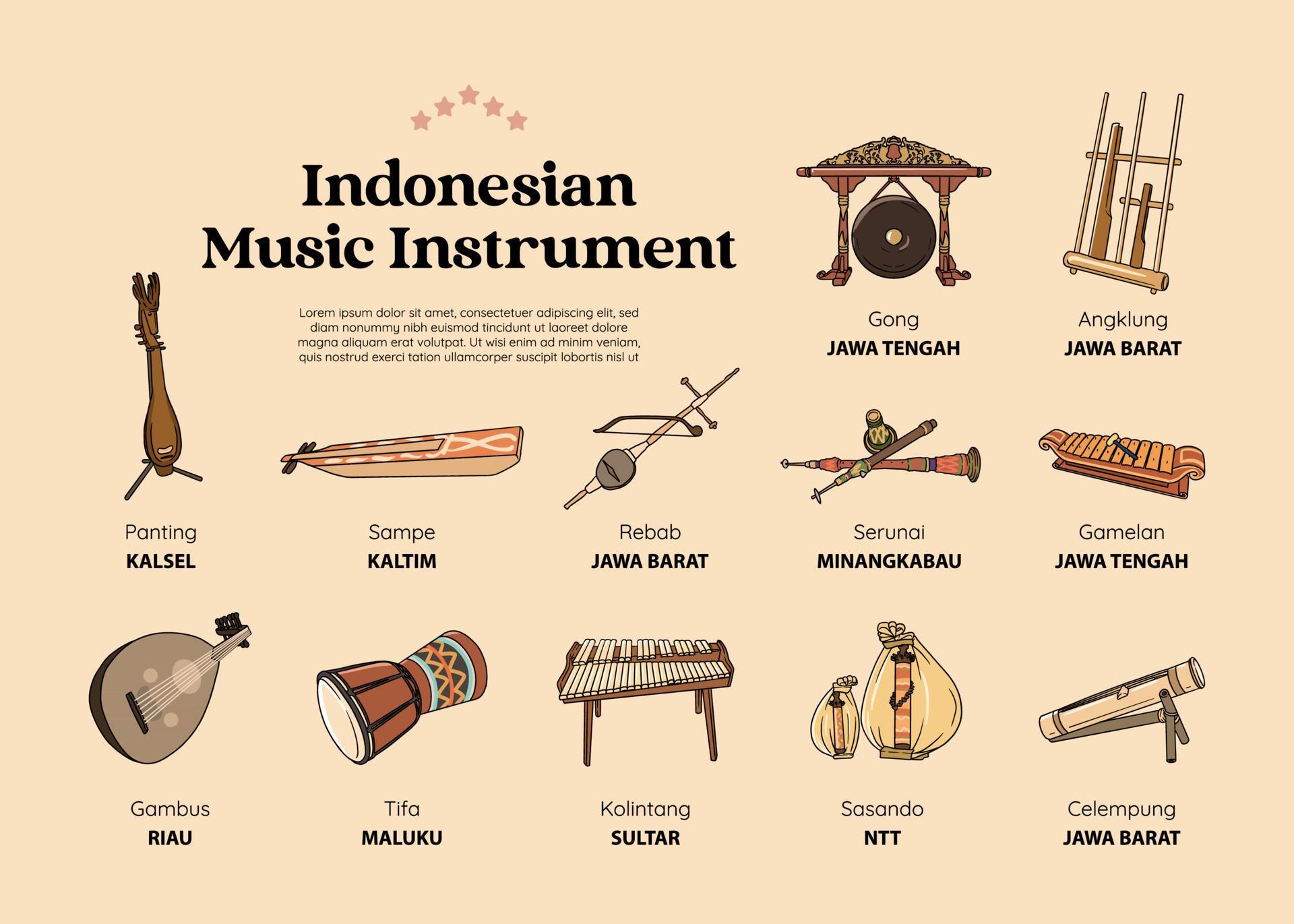 Looking ahead, the future of the Indonesian music ecosystem appears bright. The government’s strategy, which includes strengthening legal frameworks, promoting technological adoption, and empowering regional talent, has laid a solid foundation for a sustainable and competitive industry. The proactive approach at the international level, advocating for fair royalty practices, positions Indonesia as a leader in the global creative economy. By supporting collaboration between the government, the creative industry, and creators, as advocated by Minister Riefky, the ecosystem is becoming more adaptive, inclusive, and competitive .
In conclusion, the government’s multifaceted support is transforming the Indonesian music industry from a fragmented and often financially precarious sector into a well-structured and economically vital part of the nation’s economy. The concerted efforts to overhaul the royalty system, protect intellectual property, provide direct funding, and empower musicians across the archipelago are creating a more just and prosperous environment for all. While challenges undoubtedly remain, the momentum generated by these policies and programs is undeniable. With a clear vision and tangible action, Indonesia is not only ensuring the preservation of its musical heritage but is also securing a prominent place for its artists on the world stage.