The landscape of K-pop in 2026 is a fascinating study in contrasts and rapid evolution. It is an industry navigating the powerful currents of short-form content virality while simultaneously embracing the emotional depth of poetic pop and the nostalgic pull of classic dance formulas. This year, the genre has solidified its position not just as a global musical force, but as a complex ecosystem where strategic innovation, cross-label collaboration, and a return to musical roots coexist. From the chart-topping success of B-sides sparked by viral challenges to the monumental impact of supergroup collaborations and a noticeable shift in sonic direction, K-pop in 2026 is more dynamic and unpredictable than ever. We will explore the key trends defining this year’s music scene, analyzing the hits, the strategies, and the artists shaping the future of the industry.
The Viral Engine: How Short-Form Content Dictates the Charts
The influence of short-form video platforms on K-pop is no longer a nascent trend; it is the primary engine driving a song’s success. In 2026, the path to the top of the charts is often paved with a 15-second hook, a catchy dance challenge, and a wave of user-generated content . This paradigm has fundamentally altered how music is both created and consumed. The data speaks for itself: a 2025 report by TikTok and Luminate found that a staggering 84% of songs that entered the Billboard Global 200 in 2024 first gained traction on TikTok, a trend that has only intensified this year .
The Resurgence of a B-Side: BABYMONSTER’s “Really Like You”
A prime example of this phenomenon is BABYMONSTER’s “Really Like You,” a B-side track from their full-length album [DRIP] released approximately a year and two months ago. The song experienced a remarkable chart resurgence in early 2026, climbing 47 spots on Spotify’s Weekly Top Songs Korea chart and reaching No. 77 on YouTube Korea’s Weekly Popular Songs Chart .
This incredible comeback was not fueled by a new promotional cycle but by a viral challenge. A performance video from their Japan fan concert featuring a point choreography of hand gestures forming an “O” shape, synchronized with cute expressions of fluttering emotions, captured the public’s attention. This challenge quickly spread across social media, attracting participation from countless fans and even fellow artists. The impact was immediate and sustained: “Really Like You” topped TikTok Korea’s Music Viral 50 chart for five consecutive days from January 11 to 15, and the number of TikTok posts using the song surpassed 100,000 . This case perfectly illustrates how a single, engaging piece of choreography can breathe new life into a track and propel it to new heights.
The “Short” and the “Sweet”: Structural Changes in Music
The dominance of short-form platforms has directly influenced song structure, with a noticeable trend towards shorter running times. Many recent K-pop hits are under three minutes, including ILLIT’s “Not Cute Anymore” (2:12), TWS’s “Overdrive” (2:40), and Jennie’s “Like Jennie” (2:04) . Culture critic Kim Heon-sik noted that this has led to changes in song architecture, with tracks sometimes jumping straight into the chorus to capture immediate attention . This is evident in ILLIT’s “It’s Me,” from their album MAMIHLAPINATAPAI, which centers around a repetitive electronic refrain designed for quick recognition across feeds . The song, just over two minutes, became one of the group’s strongest commercial performances in Japan .
Challenges and Strategies: CORTIS and (G)I-DLE
Rookie boy band CORTIS has fully embraced this challenge-ready formula. Their tracks “Go!” and “REDRED” feature chant-like hooks and choreography tailored for viral spread. The success of “REDRED,” which entered the Billboard Bubbling Under Hot 100 at No. 17, the highest for a rookie boy group in five years, and helped push their album GREENGREEN to sell 2.3 million copies in its first week, demonstrates the commercial viability of this strategy . The “REDRED” challenge even attracted participation from major artists like Blackpink’s Jennie and BTS’s J-Hope .
Even established groups are leveraging short-form marketing. (G)I-DLE’s 9th mini-album, We made, released in July, saw its title track “Gimme Dat Love” hit number one on Bugs and secure top positions on other major charts . While the song itself is described as capturing a “pop-oriented sound and summer vibes,” its success is amplified by strategic releases designed for immediate consumption and shareability . The music video also reached number 1 on the YouTube Music Video Trending Worldwide chart, further cementing the importance of visual content in a song’s success . The pre-release track “Crow” also re-entered the Melon HOT100, showcasing how pre-release strategies can build momentum for the full album .
The Poetic Counterpoint: The Rise of Emotionally Durable Music
However, the industry’s focus on virality has not overshadowed a parallel trend: a growing appetite for “emotionally durable” music. This approach prioritizes lyrical intimacy, album-wide cohesion, and a listening experience that rewards patience over instant gratification. Industry researchers, including firms like MIDiA, have questioned whether viral exposure translates into sustained listener loyalty . This sentiment is echoed by a domestic decline in K-pop digital consumption in South Korea, which dropped 6.4% year-on-year in 2025, with some analysts attributing the fall to a growing volume of English-heavy, short-form songs that feel less connected to local listeners . This has led to the rise of a distinct musical direction focused on slower, immersive soundscapes.
Singer-Songwriters and Festival Circuit Success
Leading this charge is singer-songwriter Hanroro, known for her image-rich lyrics and restrained emotional delivery. She has steadily expanded her presence on Korea’s festival circuit, performing in front of roughly 15,000 people at THE GLOW 2026 festival and securing a headline slot at the Green Camp Festival . This success underscores the viability of artists whose appeal is built on sustained listening rather than short-form virality.
AKMU’s Return to Cohesive Artistry
Another major example is the sibling duo AKMU, who returned with their fourth studio album, FLOWERING, seven years after their previous full-length release. Instead of prioritizing isolated viral moments, the project emphasized album-wide cohesion, with Lee Chan-hyuk writing and arranging every track himself. Their recent listening event in Seoul, where fans sat quietly through the album rather than filming clips for social media, provided a stark contrast to the frenetic energy of many idol releases .
BTS’s Introspective Masterpiece, “Swim”
Even the world’s biggest K-pop group, BTS, has embraced this more introspective and mature sound. Their post-military comeback album, Arirang, opens with “Swim,” a slow-burning alt-pop track written by RM about the “heavy mental fog and confusion” of adjusting back to normal life after a long time . This was a bold move for a group with so much hype surrounding their return, but it paid off immediately. “Swim” pulled in 14.64 million streams on Spotify on its first day, leading the album to a 110 million stream debut before heading straight to No.1 on the Billboard Hot 100 . The track has since surpassed 500 million streams on Spotify, becoming the first song released in 2026 to reach that milestone globally . The vulnerability of the lyrics and the raw, personal feel of the track prove that a soft melody can resonate powerfully with a global audience. As RM stated, they hope their music encourages listeners to “keep swimming forward” in any circumstances . While “Body to Body,” another track on the album, is an explosive celebration of reunion, “Swim” sets the emotional tone of the album, showing the duality of their artistry .
The Sound of 2026: Sonic Shifts and Genre Blending

Beyond the influence of short-form content and the rise of poetic pop, 2026 has seen a significant evolution in K-pop’s sonic palette. The industry is increasingly turning to electronic music, revisiting classic dance-pop formulas, and embracing sampling to connect with a global audience.
The EDM and Electronic Wave
An increasing number of K-pop acts are leaning into electronic music, signaling a defining sonic current for the year . This is not seen as a sudden shift but a natural convergence based on shared musical DNA and marketing advantages. K-pop and electronic music both revolve around dance and EDM-based structures, which makes them “musically easy to align,” according to music critic Lim Hee-yun . Electronic music is also optimized for short-form platforms, creating a powerful synergy when paired with K-pop’s signature hooks and challenge-driven choreography. This is why K-pop artists have continued to gravitate toward it .
Prominent Examples of EDM in K-pop
A. IVE’s “Bang Bang”: This pre-release track, released ahead of their second full-length album, is built on an EDM and electronic foundation, combining a forceful progression with a swing-inspired intro and a straight, driving beat . This marked a sharp contrast to their earlier dream pop and hip-hop-based dance sound .
B. KiiiKiii’s “404 (New Era)”: Returning in January, the group’s main track is grounded in UK house and garage, characterized by a heavy bassline and contemporary club-oriented sound .
C. Blackpink’s “Jump”: One of the most high-profile electronic releases in recent months came from Blackpink’s “Jump,” produced by Diplo alongside Teddy. The single moved away from their signature hip-hop and trap foundations to foreground hardstyle and techno, genres still relatively uncommon in mainstream K-pop .
Reviving the Classic Dance-Pop Formula
While many artists chase the latest trends, a growing number of male K-pop acts are taking a different path by revisiting the genre’s roots. They are embracing the melodic storytelling and dramatic song structures that defined K-pop’s dance-pop sound in the early 2000s. This shift comes amid the resurgence of EDM in the industry .
Leading the Trend: TXT and BOYNEXTDOOR
This trend is spearheaded by groups like TXT and BOYNEXTDOOR. TXT’s “Stick With You,” the lead single from their eighth EP released in April, showcases characteristics of second-generation K-pop, featuring emotional melodies, layered vocal harmonies, and a gradual build-up that prioritizes storytelling over production gimmicks .
Similarly, BOYNEXTDOOR’s “Viral,” the lead track from their first full-length album Home, unfolds through a traditional verse-chorus format before expanding into a dramatic bridge and dance break . This arrangement echoes elements of K-pop’s earlier dance-pop era while retaining a modern production style. BOYNEXTDOOR leader Jaehyun expressed the group’s belief that elements such as strong narrative progression, performance-focused choreography, and clear emotional peaks could feel “fresh again” when presented through their identity .
The strategy is working. TXT’s “Stick With You” earned five music show victories and propelled their EP to No. 2 on the Billboard 200. BOYNEXTDOOR’s Home surpassed one million first-week album sales, marking their fourth million-selling release . Even Treasure’s “If I,” which draws heavily from the hip-hop influences of K-pop’s early years, quickly gained traction, surpassing 100 million YouTube views within 11 days of release .
Sampling Familiar Melodies for Wider Appeal
Another notable trend is the increasing use of sampling as a strategy to appeal to a broader audience. By incorporating well-known pop songs and classical compositions, K-pop artists are creating a sense of familiarity that extends beyond their traditional fan base .
Key Examples of Sampling
A. LE SSERAFIM’s “Boompala”: The lead single from their second album samples elements of Los del Rio’s 1993 global hit “Macarena,” incorporating parts of its iconic melody and reinterpreting its signature choreography . This strategy paid off, with the album debuting at No. 10 on the Billboard 200 .
B. NCT Wish’s “Ode to Love”: The song draws from The Cranberries’ “Ode to My Family,” a tune widely recognized in Korea .
C. IVE’s “Attitude”: This track incorporates the recognizable melody from Suzanne Vega’s “Tom’s Diner” .
D. MEOVV’s “DDI RO RI”: The girl group sampled Bach’s “Toccata and Fugue in D Minor” for the main track of their second EP .
Music critic Lim Hee-yun noted that sampling can help extend K-pop’s reach by drawing from songs that have stood the test of time . However, culture critic Kim Heon-sik warned against excessive reliance, as it could lead to a perception that artists are relying on proven hits rather than presenting original creations .
The Power of Collaboration and Unconventional Buzz
K-pop in 2026 is also defined by groundbreaking collaborations and unexpected paths to success.
The Record-Breaking “Iconic By Mistake”
One of the biggest releases of the year is the digital single “Iconic By Mistake,” a collaboration between LE SSERAFIM, ILLIT, and KATSEYE . This cross-label project between groups under HYBE has shattered expectations, demonstrating the commercial potential of uniting distinct fanbases and musical identities.
The track climbed to No. 21 on Spotify’s global weekly songs chart and No. 36 on the UK Official Singles Top 100 . It also reached No. 38 on the Billboard Hot 100, the highest-charting song by a K-pop girl group released in 2026 . The collaboration has translated into tangible growth, with a 12.7% increase in the combined number of fans across the groups’ Weverse communities following the single’s release .
The song itself is an alternative-pop track fusing gothic and hyper-pop elements, shifting quickly between snappy vocal lines and wide, melodic sections . Its success underscores the power of “supergroup” collaborations in capturing global attention.
Viral Personalities and Independent Channels
Rescene’s “Love Attack” offers a fascinating case of a track gaining new life not from an agency-driven challenge but from the viral success of a member’s personal YouTube channel. Woni’s channel, “Hello I am Woni Nice To Meet You,” featuring fellow members taking on gyaru fashion and regional dialect concepts, accumulated over 392,000 subscribers in less than four months . This online buzz directly translated into a career resurgence for “Love Attack,” propelling it to new career highs on platforms like Bugs, Melon, and Spotify Korea nearly two years after its release . Music critic Lim Hee-yun noted that the resurgence was a combination of strong music, relatable personalities, and social media algorithms working in tandem . This trend reflects a broader shift among younger fans who favor idols that appear candid and approachable rather than carefully polished at all times .
Conclusion
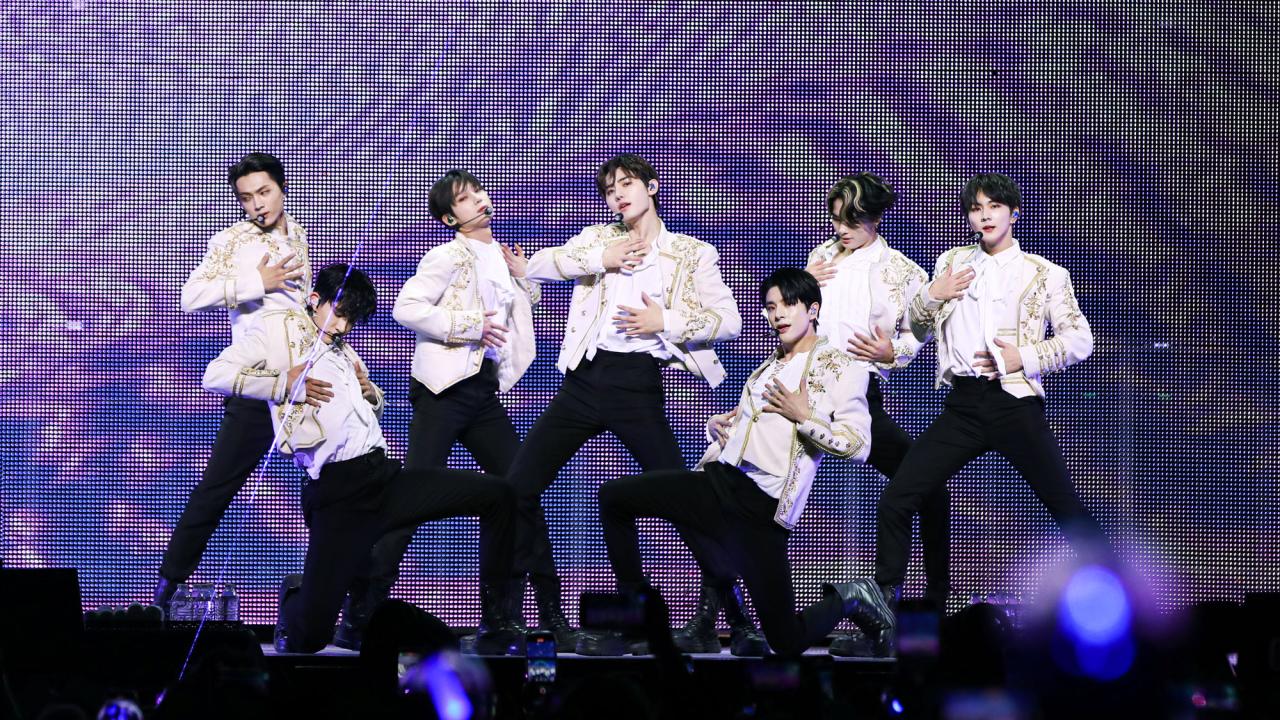
The K-pop industry in 2026 is a vibrant and multifaceted ecosystem. The “viral hook” model, driven by short-form platforms, has become the primary mechanism for chart success, compelling artists to create highly optimized tracks with immediate catchiness. Yet, this is met with a powerful counter-current: a growing demand for emotionally durable music that prioritizes lyrical depth and sonic storytelling, proving that there is still a significant audience for songs that offer a richer, more introspective experience.
This year has also seen a fascinating sonic evolution, with the genre blending into EDM, revisiting classic dance-pop structures, and strategically sampling familiar melodies to broaden its appeal. Groundbreaking collaborations like “Iconic By Mistake” have showcased the immense commercial potential of uniting fanbases, while unexpected viral moments, like those from Rescene, highlight the power of authentic personalities in connecting with fans.
From the chart-topping introspection of BTS’s “Swim” to the explosive energy of (G)I-DLE’s “Gimme Dat Love” and the genre-bending experiments of IVE, K-pop in 2026 demonstrates a remarkable capacity for both rapid adaptation and profound artistry. The future of the genre lies not in choosing one path over another, but in its ability to hold all these elements in balance—creating music that is both instantly catchy and emotionally resonant, globally accessible yet culturally grounded, and commercially driven yet artistically ambitious.