The global music industry has witnessed a seismic shift in recent years, with Afrobeats emerging as one of the most formidable forces in the entertainment landscape. What began as a regional sound pulsating through the streets of Lagos has evolved into a multi-billion-dollar phenomenon that is reshaping the global music economy. In 2026, Afrobeats has not only conquered international charts but has also achieved unprecedented financial milestones, cementing its status as a cultural and economic powerhouse. This article delves deep into the factors driving this remarkable surge, the staggering revenue figures, and the future trajectory of a genre that has become a defining voice of a generation. The rise of Afrobeats is not merely a story of musical success but a testament to the power of cultural export, digital innovation, and the unyielding spirit of African creativity.
The Financial Milestone: A Genre Generating Billions
The numbers surrounding Afrobeats in 2026 are nothing short of astonishing. According to industry reports, the Afrobeats industry now contributes an estimated $2 billion annually to the global music economy through various channels, including streaming, publishing, touring, licensing, sponsorships, and branding partnerships . This figure represents a dramatic leap from previous years and underscores the genre’s transition from a niche cultural export to a mainstream commercial juggernaut.
The global Afrobeats industry generated an estimated $5 billion in revenues across music, merchandise, fashion, and associated cultural products in a single year . This broader ecosystem demonstrates the genre’s ability to influence and monetize various sectors beyond pure music consumption. The Nigerian creative economy alone contributes more than $5.6 billion to GDP activity through entertainment, film, fashion, advertising, media, and digital culture, with Afrobeats serving as one of the strongest accelerators behind that visibility .
Nigeria’s music industry, the engine room of Afrobeats, is officially valued at ₦901 billion (over $600 million) . This valuation marks a historic threshold that has been crossed in 2026, reflecting the maturity of an industry that began as a scrappy, street-level movement two decades ago . What was once dismissed as fringe entertainment has become one of Africa’s largest creative economies, with Afrobeats, Amapiano fusions, Alte, street-hop, and countless micro-genres springing up across the continent now serving as serious revenue generators.
Streaming Dominance: The Digital Engine
One of the primary drivers of Afrobeats’ financial success has been the explosive growth of streaming platforms. According to Spotify’s 2026 “Loud & Clear” report, Nigerian artists generated more than ₦60 billion (approximately $43 million) in royalties on the platform during the 2025 calendar year . This milestone represents a 140% increase in revenue over the last two years, solidifying Nigeria’s position as a global streaming powerhouse.
The trajectory of this growth has been remarkable. For context, Nigerian artists earned ₦58 billion ($37.5 million) in 2024, a figure that was already double the ₦25 billion earned in 2023 and five times the ₦11 billion recorded in 2022 . This exponential growth pattern indicates that the industry is doubling in value almost annually, with no signs of slowing down.
The streaming figures reveal the massive scale of Afrobeats consumption. Nigerian artists accumulated a staggering 30.3 billion streams on Spotify alone . The number of Nigerian artists earning at least ₦10 million annually from Spotify has more than doubled since 2023, demonstrating that the benefits of the streaming boom are spreading beyond just the top-tier superstars .
Perhaps most significantly, a significant majority of these royalties originated from listeners outside Nigeria, proving that Afrobeats has moved beyond a “niche” export into a mainstream global staple . Afrobeats streams exceeded 60 billion on Spotify globally, making it the fastest-growing major music genre worldwide for the third consecutive year .
YouTube and the Nigerian Anomaly
YouTube has emerged as another critical revenue stream for Afrobeats artists, with a fascinating anomaly in the Nigerian market. Nigeria is the only major market where Content ID dramatically outperforms Art Tracks, with a rate of $1.23 versus $0.32 per 1,000 streams a 3.8x reversal of the typical global ratio . This pattern reflects Afrobeats’ virality driving global user-generated content, with hits like Rema’s “Calm Down” reaching 1 billion Spotify streams through TikTok virality and generating Content ID claims in premium markets with higher CPMs .
The implication is clear: for Nigerian artists, Content ID registration is essential rather than optional. The value lies not in Nigerian audiences watching, but in global audiences using Nigerian music in their content . When Afrobeats songs go viral on TikTok, they are used in YouTube content worldwide, and Content ID claims on foreign creators’ videos, where CPMs are higher, may explain Nigeria’s unusually strong Content ID performance .
TikTok has become a particularly powerful engine for Afrobeats discovery and monetization. Nigeria has approximately 35 million TikTok users, and Afrobeats has become one of TikTok’s most bankable exports . Songs go viral globally through dance challenges and creator content, creating a virtuous cycle of exposure, streaming, and revenue generation. Documented viral successes include CKay’s “Love Nwantiti,” which was rediscovered by TikTok users in 2021, sparking global momentum that drove 1 billion+ streams and topped charts in 30+ countries . Rema’s “Calm Down” became Afrobeats’ first song to reach 1 billion Spotify streams, propelled by TikTok virality .
Touring and Live Performances
The live music sector has experienced a renaissance, with Afrobeats artists selling out arenas across continents. Nigerian artists Burna Boy, Wizkid, Davido, and Tems collectively performed to over 5 million concert-goers across 40 countries . Burna Boy has broken significant barriers, becoming the first African artist to sell out Madison Square Garden twice in a year .
Afro Nation, the headline event of the global Afrobeats calendar, exemplifies the genre’s live music dominance. Now in its sixth edition, Afro Nation takes over Praia da Rocha in Portimão, Portugal, with a lineup featuring Burna Boy, Asake, Wizkid, Tyla, Kehlani, and Gunna . The festival has become a roving celebration of the diaspora, with editions staged in destinations from Ghana to the United States, following African music’s global audience . Fans fly in from several continents, filling the Algarve’s hotels and restaurants well into the summer, making it a significant tourism prize for Portugal .
African music festivals, from Lagos’s Afronation to Dakar’s Dak’Art, now attract 50,000-plus international visitors annually, generating tourism revenue that exceeds their host cities’ entire cultural budgets from five years prior . Homecoming concerts at Eko Atlantic in Lagos have become the norm rather than the exception, routinely grossing eight and nine figures in ticket sales alone . This economic impact extends beyond the artists themselves, creating employment opportunities and boosting local economies.
Brand Partnerships and Sponsorships
Corporate Nigeria and international brands have awakened to the commercial potential of Afrobeats. Companies like Glo, MTN, Pepsi, Guinness, and Stanbic IBTC are spending hundreds of millions annually on endorsements, festival sponsorships, and branded content . Even mid-tier artists now command seven-figure fees for private performances at weddings and corporate retreats .
Brand partnerships have become a crucial revenue stream for Afrobeats artists, with superstars like Wizkid, Burna Boy, and Davido entering into lucrative endorsement deals that extend their commercial reach beyond music. For the elite tier of Afrobeats artists, a single Instagram post can earn more in a day than most civil servants make in a year . This diversification of income streams has helped artists build sustainable careers and weather the fluctuations of the music industry.
The Fashion Connection
Afrobeats has become one of the strongest accelerators behind the visibility and growth of African fashion. Africa’s fashion industry is estimated to be worth approximately $31 billion in 2026, according to the African Development Bank, while broader apparel and textile revenues across the continent are projected to exceed $73 billion annually . The symbiotic relationship between music and fashion has created a powerful economic ecosystem where both sectors benefit from each other’s growth.
The cultural influence of Afrobeats has helped position African fashion on the global stage. Artists serve as style icons, showcasing African designers and traditional textiles to international audiences. The “Motherland 2025” initiative has entered its operational phase, with projects such as the Renewed Hope Creative City and the Abuja Creative City becoming functional hubs for film production, fashion design, and digital arts . Events like TOZALI – Africa Fashion and Cultural Week and the Wear Africa Expo and Exhibition further demonstrate the integration of fashion and music in the creative economy .
The New Wave of Afrobeats Mavericks
While the “Big 3” Wizkid, Burna Boy, and Davido continue to dominate, a new generation of artists is reshaping the Afrobeats scene through community-driven followings, sonic risk-taking, and cultural resonance . This new wave represents a democratization of the industry, where commercial success is determined by multiple metrics, from social media virality and streaming success to sonic experimentation, community loyalty, and on-stage dexterity .
The new guard includes artists like Mavo, the genre-fusionist who broke out mid-year with his defiant record “Escaladizzy,” and a wider cohort of mavericks, each with distinct soundscapes and massive community following . These artists have moved from niche spaces onto the public radar, piloting the scene’s most experimental era yet.
Artists like Tenski/Zaylevelten are blending heavy trap percussion with Afrobeats, rewriting harmonic rules and connecting with Gen Z listeners . Pdstrn is bringing storytelling depth to Nigerian hip-hop, reviving the fading glory of poetic hip-hop for a contemporary audience . Azanti is crafting silky R&B sounds that blend pop-soul with Naijapiano . Kunmie broke out with the soulful love anthem “Arike,” which exploded on TikTok and eventually bagged a remix with Simi and Mabel .
Female artists are also making their mark. While Ayra Starr and Tems have achieved global recognition, a new wave of female breakouts is emerging, including AR4, a distinct rapper-singer persona who stands out for her storytelling, feel-good harmonies, and exciting flows . The industry is increasingly recognizing trailblazing women such as Tiwa Savage, Yemi Alade, Waje, and Omawumi, as critical discourse evolves beyond the promotion of the “Big 3” .
Cross-Cultural Collaborations and Global Reach
Afrobeats has benefited significantly from cross-cultural collaborations that have expanded its global reach. The crossover between French rap and Afrobeats has created a powerful new fusion, with French hip-hop, West African Afrobeats, and Central African pop increasingly merging . France, the second-largest music market in Europe, has become an incubator for Afrobeats, with a strict legal quota requiring French radio stations to broadcast a minimum of 40 percent domestic music, creating a highly lucrative foundation for local talent .
The demographic makeup of the French scene has fueled this innovation, with large populations with roots in Cameroon, Mali, Senegal, and Congo residing in Paris and its suburbs, creating a built-in, culturally fluent audience for Afro-fusion . The track “Meridian” by UK rapper Dave and French artist Tiakola exemplifies this strategy, with the artists rapping in English, French, and Yoruba, hitting number one on the French charts .
The UK market has built a parallel movement known as Afroswing, with artists like J Hus and Dave successfully blending Afrobeats with UK Rap, Grime, and Dancehall . Now, UK and French scenes are collaborating directly, ignoring historical language barriers and creating a new, borderless pop architecture where rhythm dictates the global charts. French and UK rappers no longer look solely to America for mainstream co-signs; they actively seek features from African artists to gain cultural credibility and access this rapidly expanding global market .
Challenges and Structural Gaps
Despite these remarkable successes, the Afrobeats industry faces significant challenges that threaten to undermine its potential. Chief among these is the issue of intellectual property ownership and value capture. Industry leaders have warned that unless Nigeria and the wider African market rapidly formalise intellectual property frameworks, establish robust local licensing structures, and attract domestic capital, the continent will remain a mere exporter of raw talent while foreign conglomerates extract the primary economic value .
Obi Asika, Director-General of the National Council for Arts and Culture (NCAC), has stated that Nigeria’s music sector does not suffer from a lack of talent or audience, but rather from weak industry structures and ownership gaps . He noted that while Nigeria has possessed a music industry for more than 70 years, the sector has struggled to develop the formal systems required to capture and retain value.
Unregistered intellectual property remains a significant concern, with many creators losing revenue because their works cannot be properly tracked . Many of the assets driving Afrobeats’ global success are owned outside Africa, creating a structural imbalance where the artists who built Afrobeats globally are not its primary financial beneficiaries . The call for increased domestic investment to match the capital, infrastructure, and expertise deployed by global companies has become increasingly urgent.
The nightlife economy represents a particularly glaring gap. A report tracking Lagos nightlife estimated the city’s nightlife economy at about $900 million in 2024, with the national figure potentially running into billions of dollars . However, clubs, lounges, transport operators, and other businesses using Nigerian music are not paying proper licensing and royalty fees, depriving artists and the industry of significant revenue.
The Path Forward: Institutional Frameworks
To address these gaps, the NCAC is outlining efforts to strengthen the creative economy through initiatives focused on intellectual property registration, industry data, creator support, and institutional development . Plans include establishing stronger industry structures, including a Nigerian Music Business Council, a creative economy centre of excellence, and systems to improve licensing, publishing, and royalty collection .
The ultimate goal is to move Afrobeats beyond passing trends and turn it into a sustainable global industry, comparing the ecosystem to international creative models like K-pop, where businesses generate auxiliary revenue through merchandise, fan experiences, and strategic licensing . The Creative and Tourism Infrastructure Corporation (CTIC) has already begun bearing fruit, repositioning the creative economy as a projected $7.23 trillion contributor to national GDP .
Independent distribution platforms such as emPawa Africa, TooLost, FreeMe Digital, and emerging blockchain services now offer 80-90% revenue splits and near-instant payouts, terms unthinkable five years ago . This decentralization of the industry is creating opportunities for artists outside the traditional Lagos-centric model, with affordable, high-quality studios popping up across the country and diaspora-funded festivals creating sustainable circuits beyond the commercial capital.
Looking Ahead
The future of Afrobeats appears bright, with every indicator suggesting that the genre is only at the midpoint of its ascent . Global demand shows no sign of plateauing, domestic consumption is still in its infancy, and a new generation of artists, executives, and tech entrepreneurs is building the infrastructure to capture even more value at home. The ₦901 billion milestone for the Nigerian music industry is not a finish line but the starting gun for the next, far larger phase .
The sonic evolution of Afrobeats continues apace, with producers weaving alt-R&B crooners with haunting log-drum patterns, turning Hausa folk melodies into spiritual pop anthems, and marrying Igbo ogene bells with UK drill basslines . Northern artists are layering kalangu talking drums over trap hi-hats, while South-South acts slow highlife guitar lines to Amapiano tempo and add patois-inflected vocals . This fearless experimentation ensures that Afrobeats remains fresh, relevant, and capable of surprising audiences.
The “Fusion-Street” artists such as Mavo, Jamz FR, oSHAMO, and Reehaa, who are blending indigenous rhythms with global trap and electronic textures, represent the cutting edge of this evolution . Their willingness to push boundaries and defy genre conventions ensures that Afrobeats will continue to evolve and captivate audiences worldwide.
Conclusion
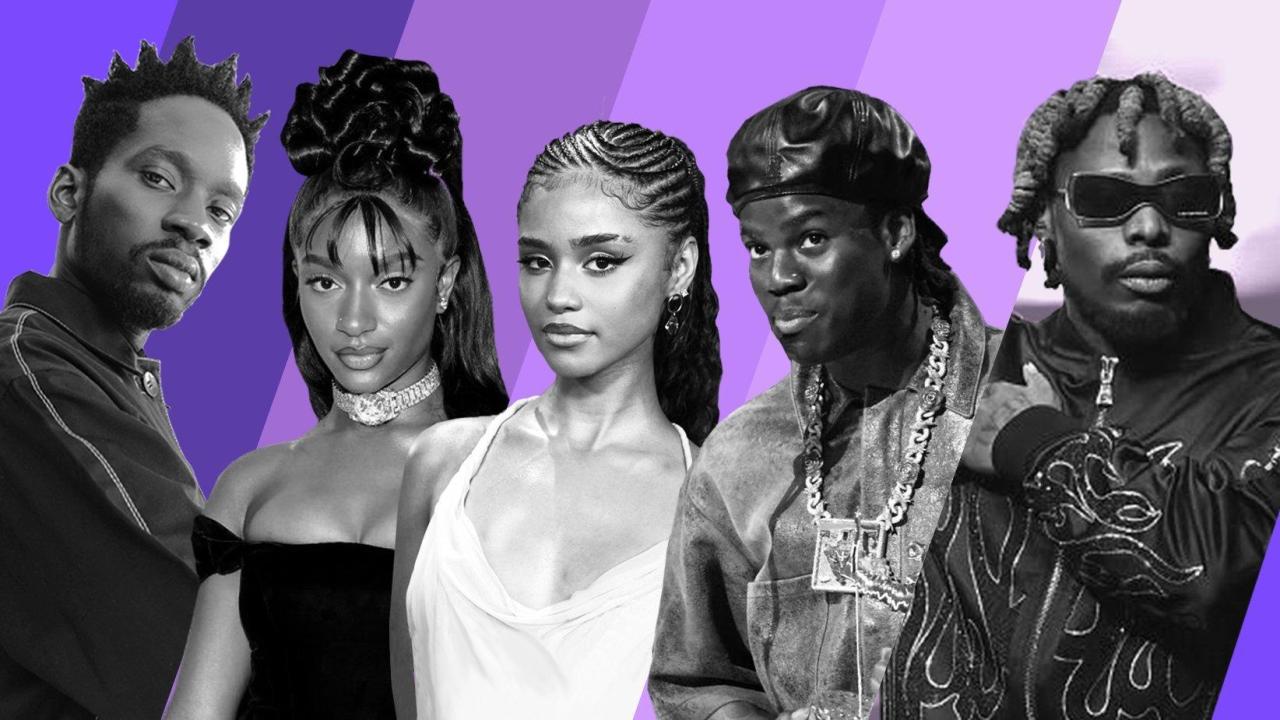
The Afrobeats revenue surge in 2026 represents more than just impressive numbers on a balance sheet; it signals a fundamental shift in the global cultural economy. A sound that emerged from the streets of Lagos has become a multi-billion-dollar industry that is reshaping music, fashion, tourism, and digital content creation across the world. The story of Afrobeats is a testament to the power of cultural authenticity, digital innovation, and the entrepreneurial spirit of African artists and executives.
However, the industry must address structural gaps to ensure that the financial benefits of this cultural phenomenon are equitably distributed. Stronger intellectual property frameworks, robust licensing structures, and increased domestic investment are essential to capture and retain value within Africa. The institutional frameworks being developed, inspired by successful models like K-pop, offer a promising path forward.
The new wave of Afrobeats mavericks, the expansion into new markets, and the continued innovation in sound and distribution suggest that the genre’s best days are still ahead. As the lines between traditional genres blur and African music becomes increasingly central to global pop culture, Afrobeats is not just participating in the global music economy it is rewriting its rules. The sound of Africa has not just arrived; in 2026, it is a permanent global fixture, and the rest of the world is finally paying attention.